
7 AI Tools for Automating Customer Feedback Loops
11 Dec 2025
Compare seven AI tools to automate customer feedback for UK SMEs — collection, analysis, routing, integrations, no-code setup and GDPR-ready.

For UK SMEs, managing customer feedback efficiently can be challenging. AI tools simplify this process by automating feedback collection, analysis, and routing, enabling businesses to act quickly on insights. From streamlining workflows to improving customer satisfaction, these tools help teams save time and focus on what matters most.
Here’s a quick breakdown of the 7 tools covered:
AgentimiseAI GuidanceAI: Offers leadership-level insights for strategic decision-making.
GenFuse AI: Simplifies workflow automation with easy integrations and no-code setups.
Revuze: Analyses unstructured feedback at scale, identifying trends and recurring themes.
Chisel: Links customer feedback to product roadmaps, helping teams prioritise features.
Zendesk AI: Focuses on support ticket analysis, automating responses and routing.
HubSpot AI: Integrates feedback directly into CRM systems for unified customer management.
Real-Time Sentiment Solutions: Tracks customer sentiment across public platforms like social media and reviews.
Each tool caters to specific needs, whether it’s improving support, enhancing product development, or gaining actionable insights. SMEs can start small, automating key feedback processes, and scale as they grow. Prioritise tools that integrate with existing systems, offer no-code setups, and comply with UK GDPR standards.
For a quick comparison of features, pricing, and ideal use cases, refer to the table below.
Quick Comparison
Tool | Primary Use Case | Key Features | Best Fit for UK SMEs | Pricing (GBP) |
|---|---|---|---|---|
AgentimiseAI GuidanceAI | Strategic decision-making | High-level insights, trend analysis | Scaleups needing leadership-level guidance | Custom/Quote-based |
GenFuse AI | Workflow automation | No-code workflows, easy integrations | Startups needing fast automation | From ~£12/month |
Revuze | Unified feedback analysis | Sentiment analysis, trend detection | SMEs handling large feedback volumes | £50–£300/month |
Chisel | Product feedback prioritisation | Links feedback to product roadmaps | SaaS and tech SMEs | £50–£300/month |
Zendesk AI | Support ticket insights | Ticket triage, automated responses | Support-heavy SMEs | £50–£300/month |
HubSpot AI | CRM-based feedback automation | Integrated surveys, sentiment analysis | SMEs using HubSpot CRM | Free; Paid plans start at tens of £/month |
Real-Time Sentiment | Social media and review monitoring | Live sentiment tracking, real-time alerts | Social-first SMEs | £50–£300/month |
These tools can transform how SMEs handle feedback, improving efficiency and customer satisfaction. Start by automating one high-impact area, such as post-purchase surveys or ticket routing, and expand as needed. Always ensure GDPR compliance and clear data privacy policies when using AI tools.
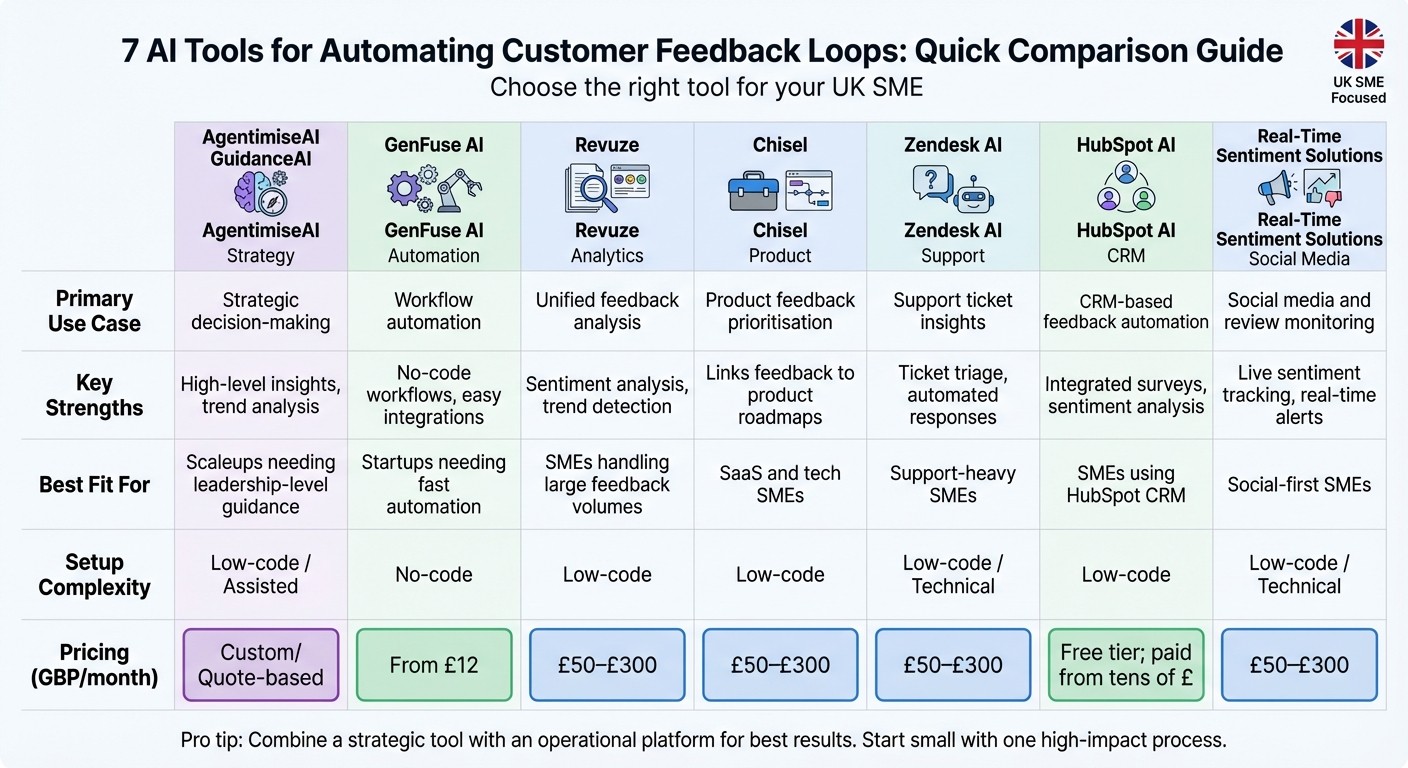
AI Customer Feedback Tools Comparison for UK SMEs
What to Look for in AI Feedback Tools
When selecting an AI feedback tool, UK SMEs should focus on five key features that transform customer insights into actionable steps. First up, multi-channel collection is a must. Your tool should gather feedback from diverse sources like emails, apps, web forms, live chats, social media, review sites, and support tickets - all in one place. This unified workspace provides a comprehensive view of customer sentiment, which is crucial for effective analysis, sentiment tracking, and quick responses to issues.
Sentiment analysis and text analytics should offer more depth than just tagging feedback as positive or negative. Look for tools with advanced features like auto-tagging, topic clustering, and confidence scores. These capabilities make it easier to spot recurring themes, such as "delivery delays" or "billing clarity", even across thousands of comments. Some tools even provide predictive insights, like identifying customers at risk of churning based on sentiment trends, allowing you to focus on proactive engagement.
Workflow automation is where these tools can save time and effort, especially for lean teams. A no-code workflow builder can automate tasks like creating CRM tickets, sending Slack notifications, or triggering emails when satisfaction scores drop below a certain level. Make sure the platform integrates with key tools your team already uses, such as HubSpot, Zendesk, or Slack. For SMEs led by founders, high-level platforms like AgentimiseAI's GuidanceAI can analyse aggregated feedback and suggest strategic actions that align with business growth priorities.
Prioritisation logic ensures your team focuses on the most critical feedback. The tool should rank issues based on factors like sentiment severity, customer value, complaint volume, and the potential impact on churn or NPS. For instance, a negative comment from a high-value customer should take precedence over one from a one-time buyer. Additionally, the system should highlight emerging trends, such as a sudden 40% increase in checkout errors, so your team can address them promptly. These rankings also feed seamlessly into automated workflows, ensuring responses are both timely and targeted.
Lastly, GDPR compliance is non-negotiable for UK businesses. The tool must handle explicit consent capture, provide clear terms for data processing, and offer features like role-based access controls and robust data-rights management. Opt for platforms with EU or UK data hosting, configurable retention periods, and audit logs to track who accessed what and when. This ensures teams can analyse aggregated feedback securely, with raw, identifiable data remaining protected and any automated follow-ups strictly based on consented information.
1. AgentimiseAI GuidanceAI for Leadership-Grade Feedback Automation
GuidanceAI turns customer feedback into actionable insights that can shape high-level business decisions. It works seamlessly with your existing feedback systems - whether you're using Zendesk tickets, HubSpot CRM data, or NPS surveys - and acts like a virtual advisor, offering the kind of strategic input you'd expect from experienced senior executives. For UK-based SMEs, this means gaining access to expert-level guidance without the need to hire a full-time leadership team. The result? Critical insights are channelled directly to decision-makers without delay.
AI-Driven Analysis and Insights
GuidanceAI doesn’t just collect feedback; it transforms it into meaningful insights. Instead of bombarding you with endless metrics, the platform identifies key themes and trends, presenting them in a way that helps leaders focus on what really matters. This allows businesses to prioritise initiatives and make decisions with confidence.
Automating Feedback Collection and Routing
The platform takes feedback automation to the next level. It triggers feedback requests at key customer touchpoints - such as after purchases, onboarding, or ticket resolutions - using emails, web forms, in-product prompts, or chat widgets. Once responses come in, they’re organised in a central workspace where AI agents categorise the feedback, link it to customer profiles, and direct it to the relevant teams. For example, urgent issues raised by high-value customers can be flagged and escalated immediately, while other feedback is neatly organised to inform product development and operational planning.
Seamless Integration with SME Tools and Workflows
GuidanceAI integrates effortlessly with tools like CRM systems, helpdesk platforms, and communication apps. Thanks to its native integrations and no-code workflows, even non-technical teams can set up and adjust feedback processes with ease. This plug-and-play design makes it a practical solution for SMEs looking to streamline their operations.
GDPR Compliance and Tailored for UK SMEs
The platform is designed with data privacy in mind. It can anonymise sensitive information after analysis, comply with data retention rules, and ensure data storage meets GDPR requirements. UK SMEs should update their privacy policies to reflect AI-driven feedback processing and secure a Data Processing Agreement (DPA) with AgentimiseAI. Additionally, the platform’s flexible model allows businesses to start small - perhaps with just one feedback-analysis agent - and scale up as their needs grow, ensuring the system evolves alongside their business. This makes it a great fit for SMEs navigating growth and increasing complexity.
2. GenFuse AI for End-to-End Workflow Automation
GenFuse AI builds on the groundwork laid by GuidanceAI, with a focus on enhancing workflow efficiency throughout the feedback process. While detailed information on the platform remains limited, it appears to automate key tasks such as collecting, routing, and analysing customer feedback. The aim is to integrate smoothly with existing workflows, reducing manual effort and improving overall effectiveness.
Initial observations suggest that GenFuse AI may unify various feedback sources - like surveys, support tickets, and social media - into a single, streamlined system. This would allow organisations to manage the entire feedback cycle, from gathering insights to implementing changes, more efficiently. By addressing the key stages of collection, routing, and analysis, GenFuse AI complements established tools like AgentimiseAI's GuidanceAI, contributing to a broader, more cohesive feedback ecosystem.
3. Revuze for Unified Customer Feedback Analysis
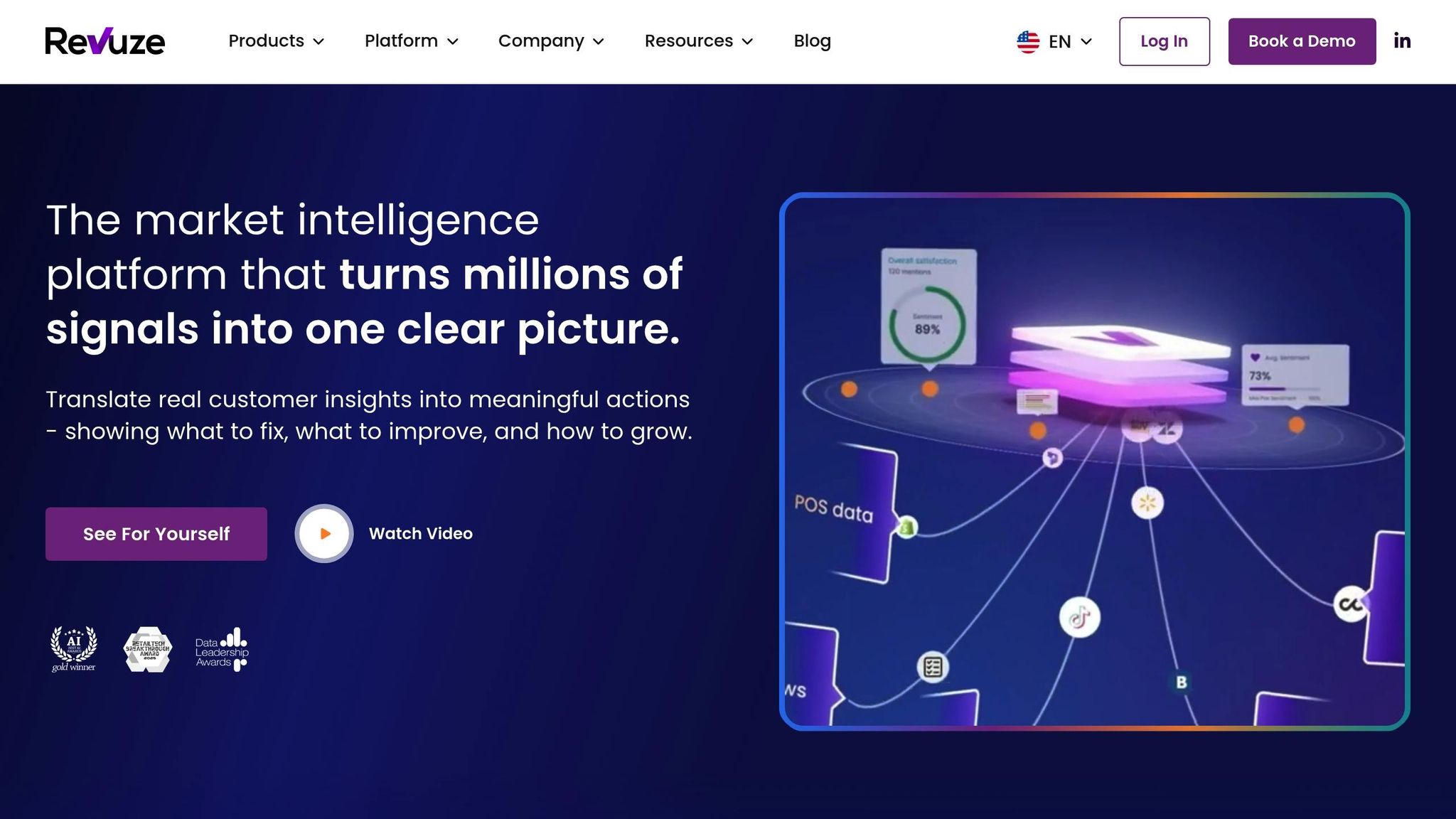
Revuze offers a fresh way to handle feedback by focusing on unstructured data at scale. Instead of relying on predefined categories or manual tagging, it uses unsupervised natural language processing to sift through millions of customer opinions from reviews, surveys, support tickets, and social media. The platform automatically creates a taxonomy of topics - like product features, pricing, packaging, or delivery - without requiring any manual setup beforehand.
AI-Driven Analysis and Insights
Revuze’s standout feature is its ability to perform sentiment analysis at both an overall level and for specific attributes. It categorises comments as positive, neutral, or negative, then breaks them down further into areas such as "delivery experience" or "customer support quality." Its clustering algorithms identify patterns by grouping similar feedback into themes - like repeated checkout issues or frequently praised features. This process transforms unstructured comments into clear dashboards that highlight churn risks and quick-win opportunities.
Ease of Integration with SME Workflows and Tools
Revuze integrates smoothly with widely used systems through native connectors and APIs, making it compatible with CRMs like HubSpot and Salesforce, support platforms such as Zendesk, and ticketing tools. Once integrated, the analysed insights appear directly within the tools your teams already use. For instance, they may show up as tagged tickets in your helpdesk, updated contact records in the CRM, or alerts sent to platforms like Slack or Microsoft Teams. For lean UK SMEs, this eliminates the need for constant context-switching. A customer success manager, for example, can view up-to-date sentiment trends and recent complaints alongside the customer’s account history, enabling better-informed conversations. All of this is supported by robust data protection measures.
GDPR Compliance and Suitability for UK SMEs
UK SMEs need to ensure that Revuze operates as a GDPR-compliant data processor. This involves reviewing a Data Processing Agreement that outlines responsibilities, security measures, and any sub-processors involved. It’s also essential to confirm the platform supports lawful data processing, adheres to retention period guidelines, and employs data minimisation practices, such as redacting personal identifiers. Additionally, verify that data is stored in UK or EU data centres with proper safeguards for international transfers, and that it fully supports data-subject rights like access, erasure, and restriction.
4. Chisel for Product-Focused Feedback Prioritisation

Chisel connects customer feedback directly to your product roadmaps. Instead of just collecting and analysing comments, it helps product teams decide which features to prioritise based on their impact and alignment with strategic goals. For UK SMEs with limited engineering resources, this means turning feedback from support tickets, sales calls, and surveys into a well-organised, actionable product backlog. This approach transforms scattered feedback into a clear, strategic plan.
Automation of Feedback Collection and Routing
Chisel simplifies feedback management by automatically gathering input from helpdesk systems, CRM notes, and in-app surveys into a single repository. With its routing rules, feedback can be pre-categorised effortlessly. For instance, comments mentioning "checkout" can be assigned to a Payments epic, while sales team notes from HubSpot might become feature requests linked to specific accounts.
AI-Driven Analysis and Insights
Using natural language processing (NLP), Chisel groups similar feedback and identifies critical performance issues. Its AI-powered PM Agent flags roadmap inconsistencies, highlights under-resourced epics, and even drafts product requirement documents. This helps small teams streamline their documentation process and focus on what matters most.
Ease of Integration with SME Workflows and Tools
Chisel is designed to fit seamlessly into SME workflows, ensuring maximum efficiency. It integrates smoothly with CRMs, support platforms, and collaboration tools, funnelling data like HubSpot deal notes, Zendesk tickets, or Intercom messages directly into product backlogs. Stakeholders can contribute feedback through channels like Slack or email and stay updated as their suggestions move through the development process. This ensures adoption without disrupting everyday operations.
GDPR Compliance and Suitability for UK SMEs
Chisel can be configured to store only essential, anonymised customer data while enforcing role-based access controls. It supports GDPR compliance by enabling Data Processing Agreements, verifying data storage locations, and documenting its role under Article 30 requirements. With its focus on automation and compliance, Chisel stands out as a reliable tool for managing customer feedback in an AI-driven ecosystem.
5. Zendesk AI for Support-Channel Feedback Insights
Zendesk AI takes feedback automation to the next level by refining support-channel insights. Designed to help customer service teams of all sizes, it’s especially handy for UK SMEs managing feedback from email, live chat, social media, and messaging platforms like WhatsApp. Instead of requiring custom models, Zendesk AI comes pre-trained with insights from billions of customer service interactions. From day one, it can classify, route, and analyse support conversations. According to internal benchmarks, businesses using Zendesk AI see a 30% drop in resolution time and a 20% boost in agent productivity. Additionally, its automated ticket triage simplifies follow-ups, making workflows smoother.
Automation of Feedback Collection and Routing
Zendesk AI’s intelligent triage scans incoming tickets and automatically applies labels based on intent, sentiment, urgency, and topic - no need for manual tagging. Automated triggers ensure specific feedback types reach the right teams, such as sending billing issues to finance or routing feature requests to product teams. Conversation bots also play a key role, gathering CSAT or NPS feedback after interactions. For example, macros can automatically create tickets for low satisfaction scores, allowing lean UK teams to maintain reliable feedback loops without needing extra staff.
AI-Driven Analysis and Insights
Once feedback is collected, Zendesk AI dives into analysis, identifying whether customer sentiment is positive, neutral, or negative. This helps prioritise at-risk accounts. It also groups feedback into themes like pricing, usability, delivery speed, and technical issues, giving managers a clear view of recurring concerns. AI text analytics track changes in topic frequency and sentiment over time, spotting potential problems before they escalate. Auto-summarisation further simplifies this process, offering leaders a quick overview of customer insights without the need to sift through every interaction.
Seamless Integration with SME Workflows and Tools
Zendesk AI integrates effortlessly with CRMs, ensuring AI-generated tags - such as sentiment, topic, and contact reason - are visible in customer records. This provides sales and account managers with a clear picture of support health. Product teams can receive regular reports highlighting frequent feature requests or bugs, which can then be added to backlogs in tools like Jira or Trello. Positive feedback can be repurposed by marketing teams for testimonials, while integrations with platforms like Slack or Microsoft Teams allow for real-time sharing of feedback spikes, encouraging cross-functional collaboration.
GDPR Compliance and Suitability for UK SMEs
In line with GDPR requirements, Zendesk offers EU data centre hosting, Data Processing Agreements, and tools for managing data access, export, and deletion requests. UK SMEs using Zendesk AI need to configure retention policies, consent settings, and lawful data processing mechanisms to stay compliant. Regularly reviewing AI outputs for potential bias and ensuring privacy notices are clear are also essential steps to meet data protection standards.
6. HubSpot AI for CRM-Based Feedback Automation

HubSpot AI brings feedback automation into a unified CRM, making it a great fit for UK SMEs. Through its Service and Marketing Hubs, it leverages machine learning to gather, route, and analyse feedback from various sources like emails, web forms, live chat, social media, and support tickets. With built-in tools for NPS, CSAT, and CES surveys, the results are directly linked to contact records, creating a closed-loop feedback system. This ensures that every customer interaction is accessible to sales, marketing, and service teams, streamlining feedback automation across collection, analysis, and routing.
Automation of Feedback Collection and Routing
HubSpot AI simplifies feedback collection by automatically pulling data from post-interaction surveys, website forms, chat logs, email replies, and satisfaction scores. Each piece of feedback is linked to the appropriate contact, company, or ticket record. Its AI-powered workflows then route this feedback based on sentiment, topic, channel, customer value, or SLA. For example, low-CSAT scores from high-value customers are sent to a retention queue, while product-related comments are directed to a feedback board. Triggers, such as a 'negative feedback' tag or an NPS score of 6 or below, enable automated follow-ups, ticket escalation, or team notifications.
AI‑Driven Analysis and Insights
Once feedback is collected, HubSpot's AI steps in to provide detailed sentiment analysis and thematic clustering. It evaluates survey comments, emails, and chat interactions to classify them as positive, neutral, or negative. Feedback is grouped into themes - like pricing, onboarding, or usability - allowing SMEs to spot patterns and trends. Additionally, Conversation Intelligence records and transcribes calls to identify key topics, while AI-generated summaries offer concise overviews for quick decision-making.
Seamless Integration with SME Workflows and Tools
HubSpot’s unified platform consolidates campaign, pipeline, and ticket data into a single location. With over 1,500 available integrations, UK SMEs can connect review platforms, survey tools, and e-commerce systems directly into the CRM. Its no-code workflow builders allow non-technical staff to automate tasks, like creating contacts from web chats, without needing developer support. According to HubSpot, companies using Service Hub report a median 90% faster response time and 62% more tickets closed within 12 months, thanks in part to improved routing and automation.
GDPR Compliance and Relevance for UK SMEs
HubSpot ensures compliance with GDPR through EU-based data centres, data-processing agreements, and consent management tools. Users can configure retention policies to delete or anonymise personal feedback data as required. Transparency is key - document AI processes like sentiment analysis and clustering in privacy notices, and confirm that data transfer and hosting adhere to UK/EU adequacy standards.
7. Real-Time Sentiment Analysis Solutions Based on MyMobileLyfe
Real-time sentiment analysis solutions powered by MyMobileLyfe allow businesses to continuously track customer feedback across various platforms like social media, review sites, forums, and blogs. These tools monitor channels such as Twitter (X), Facebook, Instagram, Trustpilot, and Google Reviews, categorising feedback into positive, neutral, or negative sentiments. For UK SMEs, this is especially useful as customers often air grievances publicly on social media before contacting businesses directly. This constant stream of data enables automated responses and deeper analysis to address issues quickly.
Automation of Feedback Collection and Routing
These platforms streamline the process of gathering and managing feedback by automatically pulling data from public channels through APIs or pre-built connectors. AI models then analyse the data to classify messages based on sentiment, intent (e.g., complaint, query, compliment, or suggestion), and urgency. High-priority issues are routed to the appropriate team without delay. For example, a strongly negative comment about a delivery issue could trigger an immediate alert in a collaboration tool or create a high-priority ticket in the helpdesk system. This ensures that smaller UK teams can respond to critical matters efficiently.
AI-Driven Analysis and Insights
Advanced sentiment analysis tools go beyond basic categorisation, offering features like emotion detection, topic extraction, and clustering of similar issues. This allows SMEs to identify recurring problems, such as frequent shipping delays or user confusion during checkout, and transform qualitative feedback into actionable insights. A 2025 review found that businesses using automated sentiment analysis saw an 80% reduction in customer complaints and an increase in positive reviews. Moreover, these insights can prompt timely human intervention when customers show signs of frustration or potential churn.
Seamless Integration with SME Tools and Workflows
These platforms are designed to integrate effortlessly with key SME tools like CRMs, helpdesks, and collaboration platforms. For instance, a negative comment on social media could automatically generate a ticket, send an alert to a Slack channel, or update a customer’s profile in the CRM. Many solutions also include no-code workflow builders, allowing non-technical staff to create rules - such as triggering an escalation email when sentiment scores drop below a certain threshold - without needing developer support. This ease of use is particularly beneficial for UK SMEs with limited IT resources.
In addition to their ease of integration, these tools adhere to strict UK data protection standards, making them a reliable choice for businesses.
GDPR Compliance and Suitability for UK SMEs
When adopting real-time sentiment analysis, UK SMEs must ensure compliance with GDPR. This involves having a lawful basis for processing data - such as legitimate interests for monitoring public social media or obtaining consent for other channels. Clear privacy notices, data processing agreements, and adherence to data subject rights (e.g., access, erasure, and rectification) are essential. Vendors should also provide data residency options within the UK or EEA, alongside robust access controls, to meet regulatory requirements and protect customer information effectively.
Comparison Table
Here’s a streamlined comparison of seven AI feedback tools, highlighting their core features, strengths, and suitability for UK SMEs. The table outlines key dimensions such as use case, strengths, feedback loop coverage, ideal SME fit, setup complexity, and pricing in pounds sterling.
AgentimiseAI GuidanceAI is perfect for founder-led scaleups, offering leadership-level feedback and turning insights into strategic decisions. GenFuse AI shines with workflow automation, integrating tools like HubSpot and Slack for seamless task management. Revuze focuses on unifying customer feedback from reviews, surveys, and social platforms, using topic clustering and trend analysis. Chisel connects customer feedback to product development, helping prioritise features and manage roadmaps. Zendesk AI analyses support tickets, automating responses and classifying intent. HubSpot AI embeds feedback capture across CRM systems, streamlining marketing, sales, and service efforts. Lastly, Real-time sentiment solutions offer continuous monitoring of social media and reviews, alerting teams to negative customer sentiment in real time.
Some tools are designed to automate the entire feedback loop, while others excel in analytics or strategic reporting. For instance, GenFuse AI, Zendesk AI, and HubSpot AI are operationally focused, handling tasks like ticket creation and CRM updates. Meanwhile, Revuze and Chisel specialise in deep analysis and product prioritisation, and AgentimiseAI GuidanceAI offers high-level strategic insights. Real-time sentiment tools are great for immediate alerts but often need integration with other systems to complete the feedback loop.
For SMEs in the UK, no-code tools like GenFuse AI (starting at ~£12/month) and HubSpot AI (with a free tier available) cater to budget-conscious teams without technical expertise. Zendesk AI and Chisel are better suited for support-heavy or product-centric SMEs that can invest in per-agent licensing. AgentimiseAI GuidanceAI is ideal for scaleups requiring leadership-grade decision support. Real-time sentiment platforms use scalable usage-based pricing, making them affordable for smaller brands.
Pro tip: Combine a strategic tool (like AgentimiseAI GuidanceAI, Revuze, or Chisel) with an operational platform (such as GenFuse AI, Zendesk AI, or HubSpot AI). Start small with a high-impact feedback process - like post-purchase surveys or customer satisfaction tracking - before expanding automation. This ensures your team can respond effectively without overloading resources.
Here’s a quick comparison of the tools:
Tool | Primary Use Case | Key Strengths | Feedback Loop Stages Covered | Best Fit for UK SMEs | Setup Complexity | Typical Pricing (GBP) |
|---|---|---|---|---|---|---|
AgentimiseAI GuidanceAI | Leadership-grade feedback and strategic decision-making | Expert-trained AI agents turning insights into actionable plans | Analysis, Action, Reporting | Founder-led scaleups needing strategic clarity | Low-code / Assisted | Custom / Quote-based |
GenFuse AI | Workflow automation | Natural-language workflows, automated follow-ups | Collection, Analysis, Action, Follow-up | Startups and SMEs needing quick automation | No-code | From ~£12/month |
Revuze | Unified analytics across feedback channels | Cross-channel insights, trend detection, sentiment analysis | Collection, Analysis | Service-based SMEs and ecommerce brands | Low-code | £50–£300/month (usage-based) |
Chisel | Product management and feature prioritisation | Links feedback to product roadmaps, scores customer impact | Collection, Analysis, Action | SaaS and tech SMEs focused on product development | Low-code | £50–£300/month (per seat) |
Zendesk AI | Support feedback and ticket analysis | AI-driven ticket classification, sentiment detection | Collection, Analysis, Action, Follow-up | Support-heavy SMEs with established helpdesk systems | Low-code / Technical | £50–£300/month (per agent) |
HubSpot AI | CRM-centric feedback capture | Integrated surveys, sentiment analysis, cross-team visibility | Collection, Analysis, Action, Follow-up | SMEs using HubSpot CRM or needing unified operations | Low-code | Free tier; paid plans from tens of £/month |
Real-Time Sentiment | Live sentiment monitoring | Real-time alerts, brand health dashboards | Collection, Analysis (real-time) | Ecommerce and social-first SMEs needing constant monitoring | Low-code / Technical | £50–£300/month (usage-based) |
Conclusion
Using AI to automate customer feedback loops offers three key benefits for UK SMEs: quicker resolution times, more informed decision-making, and improved customer satisfaction. Businesses leveraging AI in this way resolve complaints up to 52% faster, achieve over 90% accuracy in categorising feedback, and see a 40% increase in both customer satisfaction and revenue growth.
Choosing the right feedback automation tool depends on your specific challenges. For teams overwhelmed with support requests, tools that automate classification and routing are invaluable. Product-focused SMEs should opt for solutions that connect feedback directly to product development priorities. Meanwhile, businesses with fragmented communication channels or smaller operations teams might benefit from end-to-end workflow systems that turn negative feedback into actionable tasks. Scaleups aiming for strategic insights can utilise AI agents that analyse trends and align feedback with broader growth objectives.
A good starting point is automating one high-impact feedback process before scaling up. Pairing a strategic tool with an operational platform ensures insights are effectively shared, from the customer-facing teams to the boardroom. Look for tools that integrate seamlessly with your existing CRM, helpdesk, and messaging systems. Prioritise those with no-code or low-code setups to empower non-technical teams, and ensure compliance with UK GDPR standards.
To measure success, track metrics like CSAT, NPS, resolution times, and churn rates. Assign clear ownership for each feedback category, establish a regular review schedule (fortnightly or monthly works well), and always close the loop by communicating changes made in response to customer input. While AI can identify and summarise key issues, human oversight is critical for validating classifications, prioritising roadmap updates, and approving sensitive communications. By blending automation with human expertise, UK SMEs can turn scattered feedback into a powerful tool for continuous improvement, enhancing both customer experience and business performance.
FAQs
How can AI tools help UK SMEs improve customer feedback processes?
AI tools are transforming how UK SMEs handle customer feedback by automating key tasks such as collection, analysis, and implementation. This streamlining enables businesses to uncover quicker and more precise insights, allowing them to address customer needs without delay.
Take AI-driven platforms like GuidanceAI, for example. These tools act as virtual C-suite advisors, offering strategic advice based on customer data. This empowers business leaders to make smarter, data-backed decisions. By automating repetitive feedback tasks, companies save time and effort while enhancing the efficiency of their feedback processes. The result? Happier customers and steady business growth.
What factors should UK SMEs consider when choosing an AI tool for customer feedback?
When choosing an AI tool for customer feedback, UK SMEs should prioritise how well it works with their current systems, its adherence to UK data privacy laws, and whether it offers good value for money. It's equally important to pick a tool that can grow alongside the business and be tailored to meet specific requirements.
Another key factor is whether the tool recognises local language subtleties and aligns with cultural expectations. These capabilities can make the feedback collected more relevant and easier to act upon, ultimately improving customer engagement.
How do AI tools for customer feedback comply with GDPR regulations?
AI tools for customer feedback are built to align with GDPR regulations by following strict data protection protocols. They employ data minimisation, collecting only the information that's absolutely necessary. Additionally, they encrypt customer data to safeguard it from unauthorised access and maintain clear transparency about how the data is gathered and used.
These tools also prioritise explicit consent, ensuring users agree before any data is collected. They empower individuals with full control over their personal information, allowing them to access, correct, or request its deletion with ease. This approach not only ensures GDPR compliance but also helps build and maintain customer trust.