5 Common Multitasking Issues AI Solves for Teams
8 Dec 2025
AI consolidates tools, prioritises tasks, summarises meetings, maps dependencies and finds documents to cut multitasking and restore focus for distributed teams.
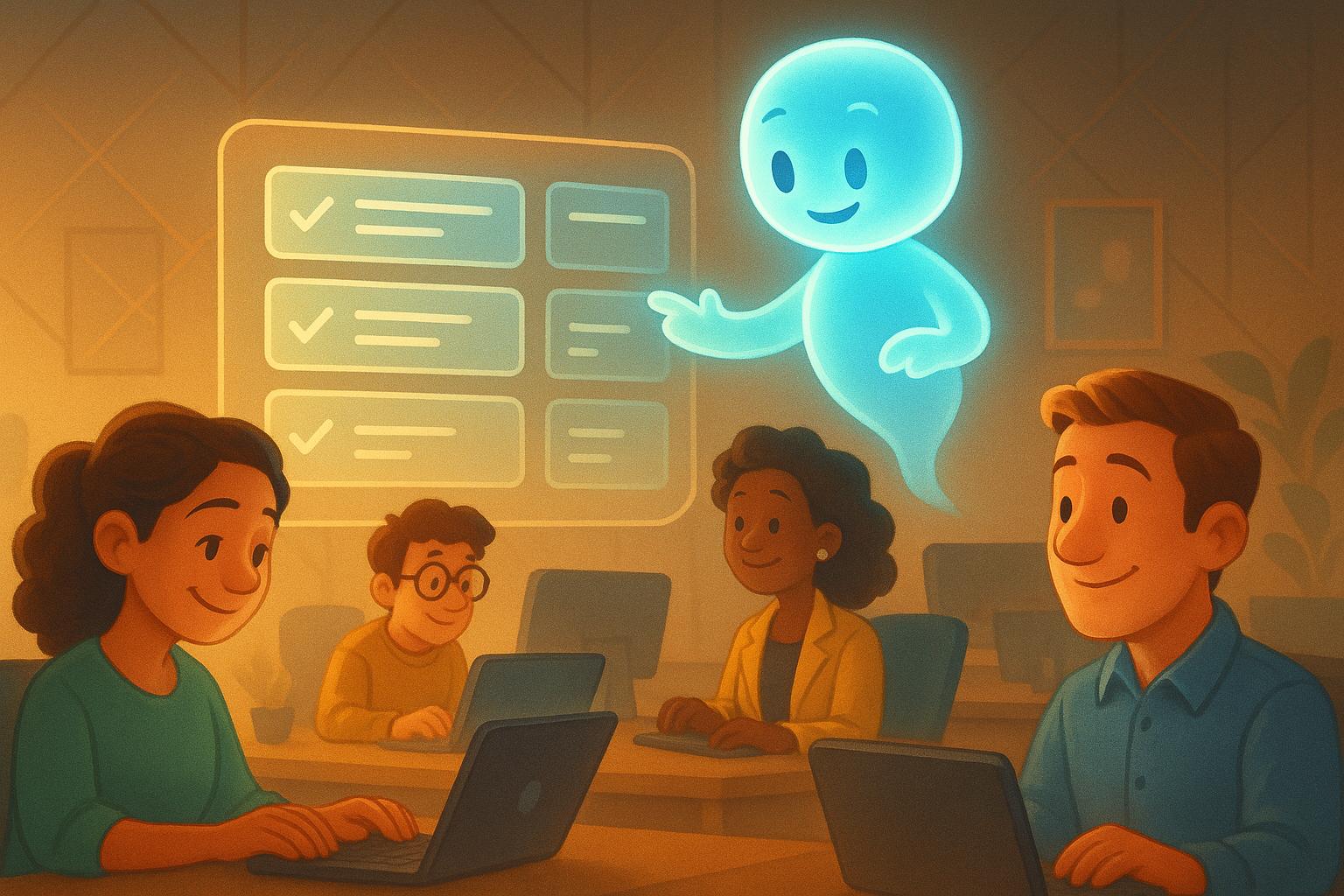
Multitasking hurts productivity, especially for UK teams juggling remote work and digital overload. AI tools are stepping in to tackle the chaos by automating repetitive tasks, reducing distractions, and improving workflows. Here’s how AI addresses five major multitasking challenges:
Scattered attention across tools: AI consolidates emails, chats, and tasks into one dashboard, cutting down app-switching.
Mental overload: AI prioritises tasks based on deadlines, effort, and impact, helping teams focus on what matters.
Unproductive meetings: AI meeting assistants summarise discussions and capture action items, reducing follow-ups.
Missed deadlines from hidden dependencies: AI maps task dependencies and automates handoffs to prevent delays.
Time wasted searching for information: AI-powered knowledge systems retrieve documents and decisions instantly.
UK SMEs can use platforms like AgentimiseAI to optimise workflows and improve decision-making. Start small by testing AI solutions in areas like task prioritisation or meeting summaries, then scale based on measurable results like saved hours or reduced delays. AI isn’t just a tool - it’s a way to simplify work and focus on outcomes.
1. Scattered Attention Across Multiple Tools and Channels
For many UK SMEs, mornings often start with a whirlwind of platform hopping. First, you’re in Outlook handling client emails. Then it’s over to Slack for team updates, followed by a quick check of Asana or Monday for project tasks. Next, you’re digging through Google Drive for a document, only to jump into a Teams call. All of this - and it’s not even lunchtime yet. This constant switching between tools drains productivity and accuracy.
A 2023 survey by Asana revealed that employees switch between 10 apps nearly 1,200 times a day. Each switch costs valuable minutes of focus, and over time, this phenomenon - termed "digital fatigue" - adds up to hours lost daily.
For distributed teams across the UK, this fragmentation can lead to major inefficiencies. Imagine your marketing manager in Manchester using one set of tools, while your developer in London depends on another, and your client-facing team operates on yet another system. Important details can easily fall through the cracks. Decisions made during a Zoom call might never make it to the project board. Client feedback buried in an email thread may go unnoticed. Updates from colleagues working different hours might not be addressed until the next day. The result? Duplicated work, repeated questions, and missed opportunities.
The Harvard Business Review found that employees spend around 28% of their workweek managing email and nearly 20% searching for internal information scattered across tools. For a small UK team, that’s almost half the week spent on "work about work" instead of actual delivery - an inefficiency that directly impacts revenue.
AI-Powered Workflow Consolidation
The answer lies in unifying your tools. AI-powered consolidation platforms bring together emails, chat, project boards, calendars, and document storage into one central hub. Using natural language processing, these tools identify tasks, assign owners, and track deadlines across all sources. Instead of jumping between apps, your team gets a single dashboard that shows everything they need to focus on.
Here’s how it works: AI extracts tasks from emails (e.g., "Can you send this by Friday?"), pulls action items from meeting transcripts, tracks requests from Slack or Teams, and monitors changes on project boards. Everything is organised by priority and project. For distributed UK teams, this centralised system can even adjust for local times (BST or GMT), highlight who’s online, and surface the most pressing updates at the start of the day. With this unified view, your team knows exactly where to begin.
In early 2023, a UK-based edtech scale-up slashed meeting times by 35% and increased task completion rates by 28% by switching to an AI-enhanced workspace. They replaced separate tools for chat, tasks, and documents with one integrated platform, reducing daily app switches per employee from 15 to just 6. Similarly, a European SaaS marketing team saw a 40% drop in missed deadlines after adopting an AI-powered project management tool. By syncing tasks from emails, chats, and documents into one dashboard, they reclaimed 2.5 hours weekly per team member - nearly half a workday saved.
While consolidating workflows improves visibility, managing the flood of notifications is another challenge.
AI Notification Management
Even with streamlined workflows, notifications can pile up. AI-driven notification systems tackle this by filtering alerts from emails, chats, project tools, and calendars. Using machine learning, they rank notifications by urgency, relevance, and context. Critical alerts - like a blocker message from a project lead for a live UK client - are flagged immediately. Meanwhile, less urgent updates are bundled into summaries for later review.
For UK SME leaders ready to adopt this approach, the steps are simple. Connect your AI tools to existing platforms like Microsoft 365, Slack, or Teams. Set clear rules for what counts as “urgent” (e.g., client issues or legal concerns) versus “batchable” (like newsletters or routine updates). Then, establish focus windows - say 09:30 to 11:30 and 14:00 to 16:00 - during which the AI suppresses non-critical alerts. Team members can rely on scheduled digests while still having the option to override the AI when needed.
While these tools improve day-to-day operations, leadership often faces unique challenges in maintaining strategic oversight.
AgentimiseAI's Leadership Support
For founders managing distributed teams, fragmented attention can make it hard to stay on top of strategic priorities. Decisions often get lost in email threads, chat conversations, or meeting notes, leaving leaders without a clear overview. This is where AgentimiseAI steps in with its leadership-grade AI agents.
AgentimiseAI’s GuidanceAI acts as a virtual advisor, integrating with your existing tools to analyse communication patterns, workflow bottlenecks, and decision-making delays. For UK SME leaders, these agents can pinpoint inefficiencies - like decisions being split between email and chat - or highlight that critical updates are buried in lengthy threads. They then recommend actionable solutions, such as consolidating decisions into a single repository.
What sets GuidanceAI apart is that it’s trained by real business experts. It doesn’t just identify problems; it helps founders and managers redesign processes. For instance, it might suggest new meeting cadences, streamlined reporting formats, or improved escalation paths to minimise unnecessary context switching.
Tim Murphy, MD of Murphy McKenna Construction, shared: "Agentimise brought structure to our thinking, helping our leadership cut through the noise and focus on what really mattered. That shift brought unity at the top and a surge of energy across the wider team."
Take a 40-person UK tech scale-up as an example. By using AgentimiseAI’s GuidanceAI, the founder could audit how much time the leadership team spends switching tools or chasing updates. The AI might recommend consolidating reporting into standardised briefings ahead of board meetings. Department heads could use tailored AI agents to generate weekly summaries, pulling data from project tools, CRM systems, and support platforms - eliminating the need for manual report assembly. Over time, these leadership-focused agents help create scalable processes that centralise decisions and metrics, allowing teams to focus on execution while keeping leaders fully informed.
2. Mental Overload from Managing Multiple Priorities
Picture this: a product manager in Bristol juggling multiple projects, a developer in Edinburgh splitting their time between fixing bugs and building new features, and an operations lead in Birmingham trying to negotiate with suppliers while improving internal processes. Each of them is facing a barrage of competing demands, and as a result, their mental clarity takes a hit. For many UK SMEs, this scenario is all too familiar, and it directly affects productivity, morale, and overall business performance.
The problem isn't about lacking skills or capability - it's about the absence of clear prioritisation. Every new task or request demands an on-the-spot decision about what to tackle first. Over time, this constant decision-making drains the mental energy needed to focus on high-impact work. The situation is made worse by the isolation and asynchronous nature of remote work, which often leaves employees feeling disconnected.
In remote settings, managers struggle to get a clear picture of how workloads are distributed. Some team members end up overwhelmed, while others have capacity to spare - but without in-person interactions, these imbalances often go unnoticed. Time zone differences add another layer of complexity. For instance, a team member might receive an "urgent" request at 17:30 from a colleague just starting their workday, creating a sense of being "always on" and making it hard to mentally switch off.
Hidden dependencies between tasks and projects only add to the chaos. Without understanding how tasks are interconnected, employees often work through them in a less-than-ideal order. A delay in one area can bring progress to a halt for others, and in virtual environments, these interdependencies are harder to spot. What might have been resolved through a quick chat in the office can now take multiple emails or meetings across different time zones to untangle.
The costs of this mental overload are steep. According to a survey by The Economist, virtual team challenges can result in incomplete projects, missed performance goals, and even lost sales worth hundreds of thousands of pounds. On top of these measurable losses, there are intangible effects like stress and low morale. When priorities are unclear, employees often default to working on easier, lower-impact tasks, which leads to project delays and unmet targets.
A striking 82% of people admit to multitasking during virtual calls - whether it's checking emails, browsing the web, or handling other tasks - because they're overwhelmed and trying to manage too many responsibilities at once. And it's not just individuals who suffer; poor task delegation and unclear roles exacerbate the issue. When responsibilities aren't well-defined, tasks are completed in a disorganised manner, leading to delays and quality issues. Managers, unable to track progress effectively, might not notice when one employee is drowning in work while another has time to spare. This imbalance often remains hidden until it's too late - when burnout or a missed deadline makes it impossible to ignore.
The stress of constant uncertainty chips away at job satisfaction. Remote work amplifies this by making it harder for employees to access quick reassurances or clarifications. The pressure to appear constantly productive across multiple projects often pushes people into multitasking, which ironically reduces their overall efficiency.
For founder-led UK SMEs, the stakes are even higher. When leadership struggles to set clear priorities - balancing client demands, growth strategies, operations, and team development - the resulting confusion trickles down to the entire organisation. Mixed signals about what truly matters leave employees mentally overloaded, undermining both their wellbeing and the company’s productivity.
This is why having a solid prioritisation framework is so important. It's not just about managing tasks - it's about preserving the mental clarity that teams need to thrive.
AI-Driven Task Prioritisation
When mental overload strikes, the solution isn’t simply to work harder or longer - it’s about focusing on the right tasks at the right time. AI-driven task prioritisation offers a smarter way for virtual teams to manage their workload. By using clearly defined metrics like deadlines, dependencies, required effort, and business impact, AI ranks tasks in a way that prioritises what truly matters. Unlike traditional to-do lists that stay static and rely on manual updates, AI dynamically adjusts rankings as conditions shift. Urgent tasks are automatically elevated, while less critical ones are moved down the queue. This approach ensures teams stay focused on high-value work.
Here’s how it works: the AI analyses task details and assigns a priority score based on factors like deadlines, effort, and impact. Teams can fine-tune the system to align with their specific needs. For example, a UK-based company might see a "£100,000 renewal at risk" flagged as more urgent than a routine UX tweak. Similarly, a bug affecting hundreds of customers would take precedence over a minor feature request. By mapping dependencies, the AI also ensures that tasks unblocking others are prioritised, preventing bottlenecks in distributed teams.
The result? Instead of juggling dozens of competing tasks, each person gets a simple, ordered "today" list with three to five key items for the day. Lower-priority tasks are pushed into a backlog until they become relevant. Some systems even group similar tasks - like client emails or minor admin jobs - into batches to minimise context switching. If someone veers toward low-priority work, the AI sends gentle nudges to refocus on high-impact tasks.
A 2023 report from the Asana Work Innovation Lab found that 68% of knowledge workers lack clear priorities, and 27% struggle with constant task switching, which prevents them from doing their best work. The same study revealed that workers spend 60% of their time on "work about work" - things like status updates, searching for information, or deciding what to do next. AI coordination aims to reduce this wasted time. Tools like Motion, an AI scheduling platform, claim users save up to 30% of their time by automatically scheduling tasks and adapting to changing priorities or meeting schedules.
For UK teams, integrating AI with tools like Outlook or Google Calendar can be a game-changer. The AI schedules focus blocks of 60–120 minutes, adjusts workloads based on meeting density, and labels these periods as "focus time" while limiting notifications. If urgent tasks arise, lower-priority items are rescheduled for later in the week. Teams can also set norms, such as "no meetings before 10:00" or "focus afternoons on Tuesdays and Thursdays", which the AI respects when planning schedules.
Leaders benefit too. They can access high-level views of priorities across projects, identifying which tasks and initiatives carry the most impact or risk in the coming weeks. This visibility helps them reassign tasks, defer low-value work, and ensure senior staff aren’t overstretched. For founder-led UK SMEs, platforms like AgentimiseAI combine AI tools with expert guidance to align daily task queues with strategic priorities, ensuring operational efforts reflect broader business goals.
Implementing AI prioritisation doesn’t require a complete overhaul. Start by standardising task fields - such as due dates, owners, and impact labels - in your current tools. Introduce AI prioritisation in a "recommendation" mode, allowing teams to compare their usual priorities with the AI’s suggestions. A short pilot - two to four weeks in a specific team like customer success or product - can help fine-tune the system. Gather feedback, adjust settings, and then roll it out more widely with training on interpreting AI scores and using the "today" view. Framing the AI as a decision-support tool that allows human overrides can ease adoption.
For AI prioritisation to work effectively, teams need clear metadata:
Defined due dates and SLAs for tasks
Effort estimates or complexity tags
Links to related tasks for dependency tracking
Indicators of business impact, such as revenue or customer importance
Ownership and skill requirements
Working-time calendars across different time zones
Consistent fields like "impact", "risk", and "customer priority" ensure the AI evaluates tasks fairly and calculates accurate priority scores.
Tracking metrics like task completion rates, the number of urgent "fire drills" per week, and average context-switching time can measure the system’s success. Qualitative feedback - like fewer "what should I do next?" questions and smoother client deliveries - also signals effectiveness. Comparing these metrics before and after AI adoption can highlight where the tool adds the most value.
However, AI isn’t perfect. Over-reliance on default settings might optimise for speed at the expense of well-being, potentially overloading schedules. Less visible yet important tasks - like mentoring or documentation - could be undervalued if not properly tagged. Bias can also creep in if the system favours tasks requested by certain stakeholders. Transparency is crucial: teams must understand how priorities are set, retain the ability to adjust rankings, and ensure workloads remain reasonable, in line with UK employment laws.
When implemented thoughtfully, AI-driven task prioritisation doesn’t just reduce mental clutter - it transforms how teams work. By focusing on the most valuable tasks, individuals free up energy for problem-solving and creative work. This clarity drives meaningful results and sets the stage for broader AI-driven improvements in team workflows.
AI Scheduling for Focus Time
After identifying the right tasks, the next hurdle is carving out uninterrupted time to tackle them. For virtual teams, calendars packed with back-to-back meetings and short breaks make deep work nearly impossible. This is where AI scheduling tools step in, automatically creating and safeguarding focus blocks - dedicated periods in your calendar to work on high-priority tasks without distractions.
AI scheduling combats fragmented workdays by analysing your calendar, task lists, and meeting invites to pinpoint the best slots for deep work. These tools respect UK working hours, avoid lunch breaks, and work around regular meetings. Many systems favour 2–3 hour blocks in the morning, as that’s when knowledge workers tend to be most cognitively sharp. Routine meetings are often shifted to the afternoon. By integrating with task management tools, AI ensures high-impact tasks marked as "urgent" or "strategic" take precedence during these focus blocks. This seamless coordination allows uninterrupted time for meaningful work.
What makes these tools so effective is their ability to protect focus time once it’s scheduled. When a focus block is active, AI typically sets your status to "Do Not Disturb" in platforms like Slack or Microsoft Teams, reducing interruptions. Non-urgent notifications are grouped and delivered after the focus period ends. If someone attempts to book a meeting during a protected block, the AI flags or reschedules it, encouraging organisers to choose another time.
The benefits of this approach are supported by research. A study from the University of California Irvine, led by Gloria Mark, found that office workers switch tasks every 3 minutes and 5 seconds on average and require 23 minutes and 15 seconds to refocus after interruptions. This constant shifting can reduce productivity by 20–40%. Atlassian estimates employees lose up to 2 hours per day to distractions and recovery time. By enforcing structured focus periods, AI tools help reclaim this lost productivity.
For example, Clockwise users reported gaining back an average of 40% more focus time after enabling its AI features. Similarly, Microsoft's 2023 Work Trend Index revealed that 68% of workers feel they lack enough uninterrupted focus time, highlighting the potential of AI-driven scheduling to bridge this gap.
AI scheduling also helps distributed teams align "maker" (deep work) and "manager" (meeting-heavy) schedules across time zones. Take a distributed product team, for instance: previously bogged down by constant Slack messages and endless meetings, they implemented AI-driven focus blocks. Developers gained two 2-hour focus sessions daily, with "Do Not Disturb" enforced, resulting in a measurable increase in completed story points and fewer defects per release. Marketers, on the other hand, scheduled 90-minute "content sprints" three times a week, cutting campaign asset production times and reducing last-minute rushes. A UK-based client services team used AI to protect their mornings for client work, shifting internal updates to asynchronous channels. This change reduced email backlog and improved on-time proposal delivery.
Mainstream tools are making this process simpler. Google Calendar’s "Focus time" feature automatically declines meeting requests and limits notifications during focus blocks, encouraging teams to respect deep work. Microsoft’s Viva Insights and Outlook suggest focus slots based on meeting patterns, scheduling them as recurring events with reduced notifications. Specialist tools like Clockwise, Reclaim.ai, and Motion go even further by dynamically rearranging events when priorities shift, ensuring focus blocks remain intact.
AI scheduling also allows personalisation while maintaining team coordination. Individuals can customise their focus windows - early mornings for "larks" or afternoons for "owls" - and the AI prioritises these preferences. Templates can allocate more focus time to roles requiring deep concentration, like engineers, while reserving less for collaborative roles, such as account managers. Staff with caregiving responsibilities can block out unavailable times, like school runs, ensuring the AI avoids scheduling focus blocks during those periods. At the same time, team-level rules, such as "collaboration hours" during UK working times, ensure enough overlap for meetings and teamwork.
For UK SMEs, adopting AI scheduling doesn’t require drastic changes. Start by auditing calendars to identify peak meeting times, common distractions, and typical deep-work tasks like coding, design, or proposal writing. Choose AI tools that integrate with existing platforms like Outlook 365, Google Calendar, Teams, and Slack, ensuring they align with UK date/time formats and working habits. Establish team-wide norms, such as "no meetings before 10:30" or "minimum 90-minute blocks for complex work", and configure the AI accordingly. Pilot the system with a small group for 2–4 weeks, tracking focus, output quality, and deadlines. Use feedback to refine the rules and train staff on how to use the system, including how to handle genuine emergencies without undermining the focus block structure.
Of course, there are pitfalls to avoid. Treating focus blocks as optional can lead to meetings being scheduled over them, eroding trust in the system. Leaders must set an example by respecting and defending focus time. Overloading schedules with deep work without breaks can lead to fatigue, so it’s essential to limit daily or weekly focus hours. Ignoring time zone differences can disrupt collaboration, so teams should establish clear "collaboration hours" to ensure overlaps. Poor notification settings can still interrupt focus, so integrating communication tools effectively and setting clear norms - such as "no non-urgent messages during focus time" - is crucial.
For UK SME leaders dealing with scheduling challenges, platforms like AgentimiseAI provide tailored solutions. Their GuidanceAI feature offers AI agents trained by business experts to recommend optimal focus hours for different roles, suggest meeting culture adjustments, and measure the impact on productivity and morale. These agents can simulate scenarios, such as reducing meeting time by 20% or increasing focus blocks, to predict effects on project timelines and resource use - giving SMEs high-level insights without needing full-time productivity specialists.
When thoughtfully implemented, AI scheduling doesn’t just reduce interruptions; it transforms the way teams structure their workdays. By protecting deep work time and minimising distractions, individuals can complete complex tasks more effectively, deliver higher-quality results, and experience less stress. This approach not only boosts productivity but also fosters a healthier work-life balance.
AgentimiseAI's Guidance for Leadership Decisions
While AI scheduling tools are great for helping individuals stay focused, leaders face the added challenge of designing workflows that prevent team-wide multitasking and burnout. Platforms like AgentimiseAI offer UK SMEs and scale-ups a powerful ally: virtual C-suite advisors that guide leaders in managing workloads, resolving priority conflicts, and creating focus-friendly environments.
AI doesn’t just streamline tasks - it also consolidates critical data to support informed decision-making. For leaders managing virtual teams, visibility can be a major hurdle. Unlike in-person settings, it’s harder to spot who’s overworked, who has spare capacity, or where bottlenecks are forming. Research shows that 90% of virtual teams struggle to build relationships due to time constraints, and 69% find decision-making tougher compared to face-to-face teams. This lack of clarity often leads to missed deadlines and unnoticed burnout until it’s too late.
AgentimiseAI tackles these challenges by integrating with existing tools like project management systems, calendars, and communication platforms. It aggregates key metrics - such as task loads, response times, meeting schedules, and deadline density - and uses AI models trained on expert practices to flag issues like overloaded team members, unclear priorities, or excessive meetings. For instance, a leadership dashboard might highlight uneven task distribution or reveal a critical project lacking a clear owner.
With these insights, leaders can make smarter decisions, like deprioritising less urgent projects, reducing meeting frequency, or consolidating initiatives. AgentimiseAI’s GuidanceAI feature allows leaders to ask tailored questions like, “Which projects should we deprioritise this quarter?” or “Where is multitasking causing the most delays?” The system combines live company data with expert playbooks to suggest actionable trade-offs.
Real-World Scenarios
Imagine a scale-up where engineers were bogged down by 20+ meetings a week, causing missed deadlines. An analysis by AgentimiseAI revealed that frequent status meetings and impromptu clarifications were eating up valuable hours. By switching to asynchronous updates and consolidating recurring meetings, the company cut meeting time by 30% and significantly improved on-time delivery. In another case, a marketing team’s efforts were scattered across channels. AgentimiseAI identified duplicated campaigns and unclear ownership, enabling the team to streamline workflows and refocus their efforts.
Focus-Friendly Workflows for UK Teams
AgentimiseAI is particularly suited to UK-based leadership teams, offering tools to align workflows with local working norms. For example, it can define and enforce "focus blocks" by protecting these periods in calendars and limiting non-essential notifications. It can also recommend “no-meeting” windows, such as keeping mornings free for deep work and clustering meetings in the afternoon - aligned with typical UK working hours. Other suggestions might include simplifying approval chains, setting standard response times for different communication channels, and shifting workflows to prioritise outcomes over time spent.
Virtual C-Suite Advisors for Strategic Decisions
What sets GuidanceAI apart is its ability to act as a virtual C-suite advisor. Trained by business experts, these AI agents provide boardroom-level advice, such as modelling team structures, stress-testing workloads, or identifying potential capacity issues. For example, leaders can evaluate the impact of adding a new product line or losing a key team member. This predictive approach helps SMEs adopt the disciplined, data-driven policies often seen in larger organisations - an essential advantage in the UK and Europe, where regulatory and wellbeing standards are high.
Practical Implementation Without Disruption
AgentimiseAI supports gradual adoption by allowing leadership teams to start with low-risk pilots. For instance, they might test focus blocks in one department, reduce a subset of recurring meetings, or clarify ownership for a single project. The platform tracks the impact of these changes on metrics like delivery times, employee engagement, and missed deadlines, providing before-and-after comparisons. Positive results can then guide broader implementation, with change-tracking insights helping refine policies and avoid overcorrecting.
As businesses grow, the risks of multitasking and overload increase. AgentimiseAI gives leaders a comprehensive view of team capacity, focus time, and bottlenecks. It can flag when workflows become unsustainable - like when a central decision-maker causes delays or when cross-team dependencies lead to constant context switching - and suggest scalable solutions, such as new delegation models or clearer RACI definitions. This ensures leaders can maintain focus and meet deadlines as their organisations expand.
Measuring the Impact of Focus Initiatives
Leaders can track specific metrics through AgentimiseAI to assess the effectiveness of their focus strategies. Key indicators include:
Average uninterrupted focus hours per person per week
Number of meetings per person
Task completion lead time
Percentage of work delivered on time
Frequency of after-hours activity
Monitoring message volumes during focus blocks and evaluating the balance between strategic and reactive work can also reveal whether changes like new meeting norms or clearer priorities are driving real improvements.
Supporting Founders and Preventing Burnout
For founder-led SMEs, where leadership time is often stretched thin, AI leadership copilots can provide critical support. By recommending delegation strategies and process changes, these copilots help founders shift from daily firefighting to strategic planning. For example, they can analyse revenue versus capacity trade-offs, offering insights that are especially valuable for fast-growing UK scale-ups where maintaining focus and avoiding burnout are key to long-term success.
"Agentimise worked with us to plot a path in getting the leadership team fully on board and in so doing enthused the wider business to engage." - Tom Hall, Executive Chairman, Alitex Ltd
Staying Aligned with UK Work Norms
AgentimiseAI also ensures that leadership practices align with UK working patterns, public holidays, and expectations around out-of-hours communication. For instance, it can prevent key meetings or focus blocks from being scheduled outside agreed hours. It can also flag trends like excessive evening or weekend work, suggesting adjustments to avoid overloading teams. This proactive approach supports the growing emphasis in the UK on mental health, flexible working, and sustainable productivity.
The platform incorporates evidence-based leadership techniques like limiting work-in-progress, designing separate schedules for “makers” and “managers,” encouraging asynchronous communication, and structuring tasks around clear goals. These strategies are translated into actionable, data-backed recommendations tailored to each company’s unique workflows, helping leaders maintain both operational efficiency and strategic clarity.
3. Unproductive Virtual Meetings
Virtual meetings are now the norm for teams across the UK, but they often come with a downside - multitasking. According to research from Harvard Business Review, 82% of people admit to doing other tasks during conference calls, whether that’s emailing, browsing online, or even doing housework. Even in face-to-face meetings, 65% of participants multitask. When attention is divided, key decisions are missed, contributions diminish, and follow-up meetings become necessary, wasting even more time.
The virtual format makes it all too easy to disengage. Without the accountability of being physically present, participants can mute their microphones, turn off cameras, and treat the meeting as background noise while focusing on other tasks. Adding to the challenge, over 90% of virtual team members report difficulty interpreting non-verbal cues, which often leads to unnoticed misunderstandings that crop up later as bigger issues. For UK teams collaborating with colleagues across the US or Asia, time-zone fatigue only worsens the problem, leaving participants physically present but mentally checked out.
Poorly planned meetings exacerbate the issue. Sessions that drag on without a clear agenda, involve too many unnecessary attendees, or focus on updates that could easily be shared via email create an environment ripe for distraction. When meetings lack purpose, decision-making slows, further clarification becomes necessary, and the cycle of unproductive meetings continues, draining both productivity and morale.
The cost of these issues is substantial. Data from The Economist, cited by Norwich University, reveals that virtual communication challenges - including ineffective meetings - can result in missed performance goals and lost sales totalling hundreds of thousands of pounds. For UK scale-ups aiming to grow efficiently, these inefficiencies are more than just an annoyance - they're a serious obstacle to progress. This is where AI tools step in, offering solutions to streamline meetings and improve collaboration.
Real-Time AI Meeting Assistants
AI meeting assistants tackle the problem of multitasking by removing the need for manual note-taking, allowing participants to stay engaged in the discussion. These tools can join virtual platforms like Zoom or Microsoft Teams, transcribe conversations in real time, identify speakers, and highlight key topics with timestamps. They generate live summaries that capture decisions, highlight risks, and outline action items, assigning responsibilities and deadlines directly.
After the meeting, participants can search the transcript by keyword or topic, saving time that would otherwise be spent replaying recordings. For UK teams working with external clients or regulators, AI-generated records provide an auditable trail, reducing disputes over "who said what" and ensuring compliance without needing a dedicated notetaker.
When choosing an AI meeting assistant, look for features like accurate transcription in British English, automatic extraction of action items that integrate with tools like Jira, Asana, or Microsoft Planner, and topic-based summaries (e.g., "budget decisions" or "project risks"). Integration with platforms like Microsoft Teams and Zoom is crucial, as is ensuring secure data handling that meets UK and EU standards.
Here’s how a typical workflow might look: the AI joins the call, records and transcribes the discussion, and posts a concise summary with decisions and tasks into relevant project boards or communication channels, such as Teams or Slack. This shift from reactive note-taking to active engagement ensures critical details are captured in real time.
While these tools enhance live discussions, AI also supports more efficient asynchronous communication.
AI-Enabled Asynchronous Updates
Not every update needs a live meeting. AI can transform lengthy transcripts, emails, or chat threads into concise bullet points, summaries, or even video briefings for asynchronous review. This is especially useful for UK teams managing multiple time zones. For instance, replacing a weekly one-hour status call with an AI-generated project update every Friday eliminates the need for late-night or early-morning calls.
Take a UK fintech scale-up as an example. Instead of hosting daily stand-ups, they might rely on AI-generated updates that summarise progress, flag blockers, and outline metrics. These updates could be shared with a brief "read and respond" window, allowing team members to provide input without disrupting their schedules. By reserving live meetings for discussions that require in-depth debate or decision-making, teams can reduce calendar clutter and preserve focus time. This approach not only simplifies routine updates but also promotes consistent productivity.
Clear guidelines are key to ensuring AI-generated updates reduce meetings rather than adding to information overload. Leaders should define when asynchronous updates are appropriate - such as for routine status reporting - and standardise formats (e.g., a one-page summary with context, three key points, and decisions needed). Limiting the length and frequency of updates, as well as using clear subject lines and tags, can further prevent overload.
To make asynchronous communication effective, team members should be trained to quickly skim AI-generated content and respond succinctly. When implemented thoughtfully, these strategies can save hours each week, freeing up live meetings for high-value discussions like strategy planning, stakeholder negotiations, and creative problem-solving.
AgentimiseAI's Role in Improving Meeting Practices
AgentimiseAI builds on these AI solutions by helping UK teams identify and address the root causes of unproductive meeting cultures. While tools like AI meeting assistants and asynchronous updates are effective, many leadership teams struggle to pinpoint where their meeting processes are failing. AgentimiseAI steps in by auditing meeting patterns, flagging excessive status updates, and recommending a more structured approach with clear agendas and time-boxed sessions.
GuidanceAI, part of the AgentimiseAI suite, provides leadership-level advice tailored to the needs of UK scale-ups. This includes balancing investor updates, regulatory requirements, and internal collaboration while respecting UK norms like core working hours and limits on after-hours calls. For instance, the platform might highlight that engineers are spending over 20 hours a week in meetings, causing missed deadlines, and recommend consolidating sessions or shifting to asynchronous updates. In one case, a company reduced its meeting time by 30%, significantly improving project delivery timelines.
AgentimiseAI also helps leaders design a "collaboration blueprint" that combines high-value live sessions - like quarterly strategy meetings or monthly retrospectives - with AI-supported asynchronous routines, such as weekly project digests and written decision logs. Its coaching features guide managers on running shorter, more focused meetings, using AI to prepare materials, capture outcomes, and follow up. This ensures virtual meetings prioritise trust-building, creativity, and tackling complex challenges rather than simply relaying status updates.
Leaders can track progress using metrics like average meeting length, attendee counts, and the proportion of meetings with clear agendas and AI-recorded decisions. Other indicators include the number of recurring meetings eliminated, the frequency of follow-up sessions, and self-reported multitasking levels via quick surveys. Monitoring project cycle times and missed handoffs can reveal whether clearer decisions and action items are improving delivery. A drop in requests like "Can someone summarise the call?" and fewer disputes over task ownership signal improved clarity and focus.
For UK teams looking to adopt AI meeting tools within 30 to 60 days, a practical starting point is to pilot one AI meeting assistant for recurring sessions, establish a "meeting charter" discouraging multitasking, and introduce AI-generated asynchronous updates for key projects. By tracking simple metrics - such as hours saved, meetings converted to asynchronous formats, and satisfaction ratings - teams can refine their approach. With support from AgentimiseAI, UK founders can roll out these practices company-wide, fostering a more productive and engaged meeting culture as they scale.
4. Missed Deadlines Due to Hidden Dependencies
AI has stepped in to address the challenges of scattered focus and mental strain, but it’s also proving to be a game-changer in tackling hidden task dependencies. These occur when one person’s work unknowingly relies on another’s input, an overlooked approval process, or a specific tool - none of which are clearly documented in the project plan. For virtual teams, especially those in the UK, this issue is compounded by fragmented communication via emails, chats, and project tools, making it hard to pinpoint who’s waiting on whom.
The fallout? Work gets stuck, efforts are duplicated, and deadlines creep up, triggering last-minute chaos. For teams spread across time zones - like a UK headquarters coordinating with developers in Eastern Europe or clients in Asia - even a minor dependency can snowball into a 24-hour delay every time there’s a misstep or incomplete handover.
The financial toll is no small matter. Norwich University reports that poor delegation and communication in virtual teams often lead to incomplete projects, missed targets, and lost revenue running into hundreds of thousands of pounds. Add to this the stress and low morale that come with these failures. ProProfs Project echoes this, pointing out that poorly sequenced tasks and misallocated resources are a surefire way to delay projects and risk outright failure.
Take, for instance, a UK SaaS company preparing for a product launch. Marketing teams work on promotional assets, engineering develops features, and the legal team reviews documentation. If marketing’s materials hinge on legal’s final wording and that’s delayed, the entire launch date is at risk. This scenario isn’t unique. Whether it’s a design agency waiting on client feedback buried in an email thread or a consultancy duplicating research due to unclear responsibilities, the root issue is the same: a lack of visibility. These aren’t failures of effort or expertise - they’re failures of clarity in virtual environments where information silos hide dependencies until it’s too late.
To tackle these invisible bottlenecks, AI tools are stepping in with advanced solutions.
AI-Powered Dependency Mapping
AI-powered dependency mapping is changing the game by analysing project plans, task descriptions, communications, and documents to uncover relationships that might otherwise go unnoticed. It identifies links like “Task B can’t start until Task A is complete” or flags when multiple tasks depend on the same dataset or approval. This process turns hidden dependencies into clear, trackable connections on your project timeline.
Imagine an AI scanning your project management tools and communication platforms to reveal insights such as: “The marketing campaign launch, analytics setup, and compliance review all depend on the same content assets. A delay in content production will impact three workstreams, not just one.” For UK teams operating under tight deadlines - whether due to regulatory requirements, client contracts, or seasonal demands - this kind of visibility is invaluable.
Modern AI-enabled tools don’t just map dependencies; they continuously monitor task progress, communication patterns, and historical delivery data to predict potential delays. For example, if there’s a 70% chance a sprint goal will be missed by two days, the system sends alerts like: “This critical task has a single overburdened owner” or “Two upstream tasks are running late and will impact the release date unless reprioritised.” This allows teams to adjust resources, reassign tasks, or set realistic expectations well before a crisis unfolds.
Workflow Automation with AI
Even when dependencies are clear, manual handovers can still slow things down, especially in teams spread across different time zones. AI-driven workflow automation addresses this by automatically triggering the next task as soon as a dependency is resolved. For instance, when a developer marks a feature as “code complete,” the system can automatically assign the design review, update related tasks, notify relevant team members, and refresh dashboards - no manual intervention required.
This seamless transition is particularly useful for global teams. A designer in London might finish mockups at 6pm, and by the time a developer in Kyiv begins their workday, the task is already reassigned with all the necessary briefs and flagged dependencies.
Workflow automation also lightens the cognitive load of tracking multiple projects. Instead of team members juggling multiple tools and manually updating statuses, the AI keeps everything in sync. For example, when legal approves a document, subsequent tasks - like updating the knowledge base, scheduling customer emails, or briefing the sales team - are automatically created and communicated. To set up AI-powered automation effectively, start by mapping your current workflows and defining clear triggers for when tasks are considered “done” and ready for the next step. For example, “When a ticket is marked ‘Approved,’ the content team is automatically assigned the next task, a summary is generated, and it’s shared in the appropriate channel”. UK organisations must also ensure that these automations comply with data protection and governance standards, especially when handling sensitive or client-related information.
Beyond automating handoffs, these tools provide leaders with the data they need to make informed decisions.
AgentimiseAI's Predictive Insights for Leadership
While AI-powered dependency mapping and workflow automation solve operational issues, leadership teams need a broader perspective to make strategic decisions. This is where AgentimiseAI comes into play. By integrating data from existing project, communication, and knowledge tools, AgentimiseAI offers dashboards that highlight bottlenecks, delayed roles, and the impact of multitasking.
These insights complement AI-driven task prioritisation, giving leaders a clear view of team performance. Acting as virtual advisors, the platform surfaces key insights like “board-level initiatives most at risk this quarter,” “functions with the highest dependency load,” or “projects where context switching is causing delays.” For instance, it might reveal that an engineering team spends over 20 hours a week in meetings, leading to missed deadlines, and suggest shifting to asynchronous updates or consolidating sessions. As George Payas, Regional Marketing Manager at Glamox, observed:
"Their expertise in AI integration and process automation was invaluable, and I'd happily recommend them without hesitation."
GuidanceAI, a core feature of the AgentimiseAI suite, even offers digital representations of C-suite executives, developed with input from experienced professionals, to provide actionable, boardroom-level advice.
5. Time Lost to Manual Handoffs and Information Search
Virtual teams often face a double challenge: hidden dependencies and the hours wasted on searching for information. While AI can uncover those hidden connections, it also addresses the inefficiencies caused by manual handoffs and scattered information. Imagine how much time is lost chasing the latest version of a client proposal, figuring out who approved last quarter’s budget, or recalling decisions from a previous leadership call. For a standard 37.5-hour UK workweek, this adds up to over seven hours of lost productivity. McKinsey research highlights that employees spend around 1.8 hours daily - roughly 20% of their week - just searching for and gathering information.
The problem becomes even worse in distributed teams, where information is spread across emails, Slack messages, shared drives, and project management tools. According to IDC, knowledge workers spend about 2.5 hours each day searching for information, failing to find what they need 44% of the time. This often leads to duplicated work or interruptions for clarifications. Take, for example, a marketing manager in Manchester waiting for legal approval on a campaign. If that approval is buried in an old email thread, hours can be wasted digging through inboxes or waiting for a response. Studies show that knowledge workers lose about 5.3 hours weekly duplicating efforts due to difficulties locating existing documents. Deloitte estimates that poor knowledge-sharing practices can cost large organisations tens of millions of pounds annually in lost productivity and duplicated work.
AI offers a way to cut through these inefficiencies and make information retrieval seamless.
AI-Driven Knowledge Management
AI-powered knowledge management systems simplify how teams access information. By integrating content from emails, shared drives, chat platforms, and project tools, these systems use natural-language processing to index and link related items. Instead of remembering folder paths or filenames, you can simply ask in plain English, “What did we agree with the Bristol client about pricing for phase two?” - and the AI will instantly pull up the relevant proposal, email thread, and meeting notes.
This approach transforms how teams access institutional knowledge. No more guessing which tool holds the information or who was involved in past decisions. The AI connects the dots automatically. For instance, when you open a task in your project management system, the AI can suggest related documents, summarise past discussions, and highlight key decisions along with their owners. For UK organisations, these systems can be tailored to understand local spellings, common business phrases, and data-protection rules. They can also pull together documents, chats, tickets, and decisions into a single “topic” view. Features like time-zone-aware activity feeds allow colleagues to catch up quickly, while audit trails clearly show when decisions were made and by whom.
Teams using these systems report slashing search times from hours to minutes, experiencing fewer failed searches, and cutting down on duplicated work. Leaders can track these improvements by monitoring metrics such as the average time taken to find key documents, the number of repeated queries for information, and the volume of duplicated tasks.
Automated Documentation and Routing
AI doesn’t just make information easier to find - it also smooths the flow of work through automated handoffs. Completing a task often involves multiple steps, like notifying the next person, updating project trackers, attaching files, and explaining the context. If any of these steps are missed or delayed, progress stalls.
Modern AI meeting assistants help by automatically capturing key details during meetings. They can transcribe calls, summarise decisions, extract action items (complete with assigned owners and deadlines), and store everything in a searchable format. To maximise their usefulness, these AI-generated notes should follow standard templates that emphasise outcomes - such as decisions made, assigned owners, deadlines (using UK date formats like 14/03/2026), and relevant financial figures in pounds sterling. The AI also tags each record to its associated project, chat, or decision, ensuring it’s easy to retrieve.
Automated routing takes things further by streamlining notifications and task updates. For example, when a developer marks a feature as "code complete", the system can automatically assign the next design review, update tasks, notify the right team members, and refresh dashboards - no manual steps required. This is especially valuable for teams spread across time zones. A designer in London might finish mockups at 6pm, and by the time a colleague in another region starts their day, the task has already been reassigned with all the necessary details. AI can also handle purchase and discount approvals, sending reminders when needed. For UK SMEs, ensuring compliance with data-protection regulations and rolling out these systems gradually can lead to significant productivity gains.
AgentimiseAI's Support for Scalable Processes
While AI-powered knowledge management and automated routing solve many operational challenges, leadership teams often need a way to provide clear guidance without being constantly involved. AgentimiseAI steps in by turning recurring decisions, policies, and best-practice playbooks into specialised AI agents that act as virtual advisors for the entire organisation.
AgentimiseAI’s specialised AI agents complement other tools by codifying decisions for easy access. Leaders can update the logic as strategies evolve, ensuring the advice stays relevant while reducing the need for routine clarifications. As AgentimiseAI puts it:
“Agentimise serves businesses who want to scale without operational chaos - by embedding AI systems that replicate internal expertise and act as a trusted strategic advisor.”
For growing UK companies, this approach reduces bottlenecks by enabling teams to work independently while still adhering to leadership’s vision.
“Agentimise brought structure to our thinking, helping our leadership cut through the noise and focus on what really mattered. That shift brought unity at the top and a surge of energy across the wider team.” - Tim Murphy, MD at Murphy McKenna Construction
To measure the impact of these systems, organisations can track metrics like the number of cross-time-zone cycles needed to complete tasks, the time it takes to move from decision to task completion, the reduction in missed or delayed approvals, and employee-reported focus time. These metrics provide a clear picture of how AI-driven systems improve efficiency and productivity.
Conclusion
Virtual teams often grapple with five major multitasking hurdles: scattered attention, mental overload, unproductive meetings (with 82% of participants admitting to multitasking during them), missed deadlines caused by hidden dependencies, and wasted time on manual handoffs. When left unchecked, these issues lead to duplicated efforts, project delays, and employee burnout - draining significant time and money from UK SMEs.
To address these challenges, AI offers practical solutions. Unified dashboards and smart notification filters help reduce constant context switching. Automated task prioritisation and protected focus blocks lighten the mental load. Real-time meeting assistants can summarise discussions and capture actionable points, while asynchronous updates eliminate the need for unnecessary meetings. Dependency mapping and workflow automation highlight risks early and ensure smoother transitions, and AI-powered knowledge systems provide quick answers, saving employees hours spent searching for information.
However, tools alone won’t fix multitasking problems. AI works best when combined with clear leadership and a supportive team culture. For founder-led SMEs, it’s crucial not to treat AI as just another tool in the tech stack - it must be integrated thoughtfully to avoid adding more digital clutter.
This is where tailored solutions like AgentimiseAI come in. AgentimiseAI goes beyond basic tools by offering leadership-grade AI designed to streamline decision-making and reshape team habits. Its specialised virtual advisors - trained by real business experts - act as C-suite partners, helping founders refine priorities, rethink meeting schedules, and customise workflows to align with their company’s culture and compliance needs.
For UK businesses looking to improve multitasking, start by identifying your team’s biggest pain points - whether it’s meeting fatigue, delays in finding information, or missed deadlines. Run a small pilot programme, testing one or two AI capabilities with a cross-functional group over four to six weeks. Track simple metrics, like meeting hours per person or the average time spent locating key documents, to measure impact. Use these insights to adjust team practices and leadership routines, focusing on what works rather than relying solely on tool features. If you need structured guidance to solidify these changes across both operations and leadership levels, platforms like AgentimiseAI provide tailored AI solutions paired with leadership coaching. By aligning technology with leadership and culture, AI can evolve from a buzzword into a powerful tool for creating scalable, efficient workflows.
FAQs
How can AI help my team save time by reducing the need to switch between multiple apps and tools?
AI has the power to cut down the time your team spends juggling between different apps by integrating and automating workflows. Tasks that are repetitive, like entering data or updating several platforms, can be streamlined with AI tools. This means your team can concentrate on more strategic and meaningful work.
Take AI agents, for instance. These can serve as central hubs, gathering information from various tools and displaying it all in one place. No more constant app-switching - this not only saves time but also boosts productivity. By simplifying workflows, AI enables virtual teams to operate more efficiently and stay focused on their priorities.
How can AI help remote teams prioritise tasks more effectively?
AI has the power to transform how remote teams manage their priorities by evaluating workloads, deadlines, and team capacity in real time. With AI-powered tools, teams can automatically pinpoint the most urgent tasks, distribute resources effectively, and meet deadlines - all while avoiding burnout for team members.
Take GuidanceAI, for instance. This platform acts as a virtual C-suite advisor, helping leadership teams optimise workflows and make smarter decisions. Incorporating AI into your processes can help eliminate bottlenecks, boost productivity, and keep your team focused on achieving your core business objectives.
How can AI help teams identify and manage critical dependencies to avoid project delays?
AI has the ability to break down intricate workflows and identify key dependencies that could affect project timelines. By monitoring tasks, deadlines, and resource usage in real-time, these tools can highlight potential issues and recommend changes to keep everything running smoothly.
For example, AI-powered platforms such as GuidanceAI offer leadership teams customised insights to improve decision-making. This proactive approach addresses critical dependencies before they cause problems, minimising delays and ensuring teams collaborate effectively across projects.