AI-Driven Innovation for SMEs
27 Nov 2025
Explore how SMEs can leverage AI for innovation and growth, overcoming challenges with tailored solutions and strategic implementation.
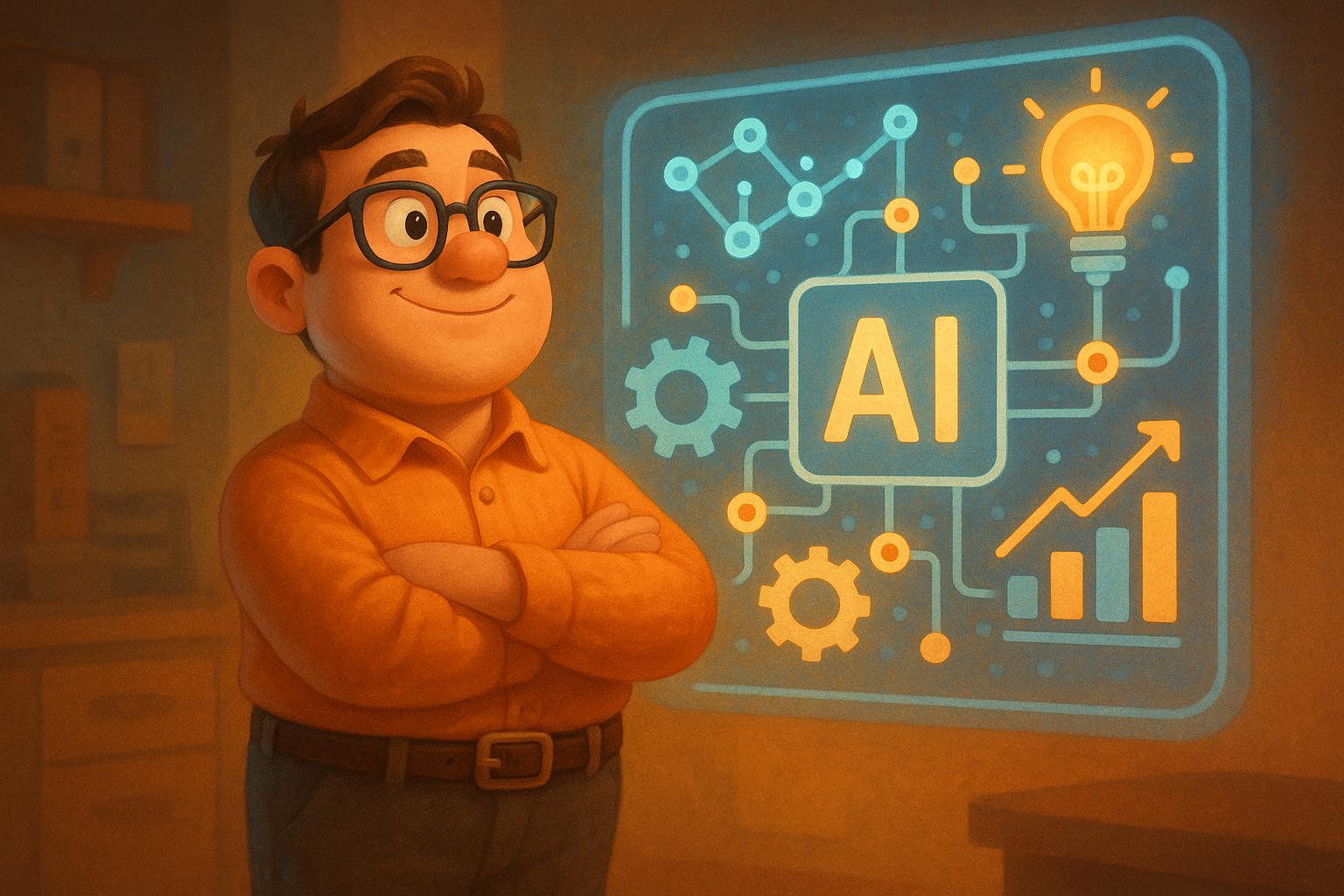
AI is no longer just for large corporations. Small and medium-sized enterprises (SMEs) are increasingly adopting artificial intelligence to solve problems faster, make better decisions, and stay competitive in changing markets. From automating customer service with chatbots to predicting inventory needs, AI tools are now affordable and accessible to smaller businesses.
Key Takeaways:
Adoption Growth: By 2025, 39% of SMEs will use AI, up from 26% in 2024.
Productivity Gains: 91% of SMEs using generative AI report noticeable improvements.
Revenue Impact: AI adoption can increase SME revenues by 10–20%.
Practical Uses: AI streamlines customer service, inventory management, marketing, and even energy savings.
Despite these benefits, SMEs face challenges like limited budgets, lack of expertise, and difficulty scaling AI tools. Starting small with specific projects and using cloud-based solutions can help overcome these obstacles. AI technologies like machine learning, natural language processing (NLP), and predictive analytics offer SMEs practical ways to improve efficiency and identify new opportunities.
To get the most out of AI, SMEs need to:
Evaluate readiness: Assess infrastructure, data, and team skills.
Start small: Focus on high-impact areas like customer service or marketing.
Measure success: Track financial and operational results with clear metrics.
Invest in training: Equip leaders and employees to work effectively with AI.
With tailored solutions and phased implementation, SMEs can integrate AI into their operations without major disruptions. Early adopters are already seeing reduced costs, increased customer satisfaction, and new revenue streams. The question is: will your business take advantage of AI to grow and compete?
AI Technologies That Enable SME Innovation
AI Technologies for SMEs: An Overview
AI is no longer just for tech giants; small and medium-sized enterprises (SMEs) can now tap into its power to achieve measurable results. By focusing on core AI technologies like machine learning, natural language processing (NLP), predictive analytics, and generative AI, SMEs can simplify their operations and uncover growth opportunities. These tools demonstrate how AI has become a driving force behind SME innovation.
Machine learning allows systems to identify patterns in data and improve their performance over time without being explicitly programmed. For SMEs, this means better predictions - whether it's recognising loyal customers or forecasting product demand.
Natural language processing (NLP) is what powers AI chatbots and virtual assistants. These tools can handle customer queries 24/7, easing the workload for staff while maintaining high-quality service. NLP also helps businesses analyse customer feedback, online reviews, and social media discussions to understand customer sentiment and identify common requests or issues.
Predictive analytics uses historical data to forecast future outcomes. This can help SMEs anticipate market trends, spot potential equipment failures, and understand customer behaviours. With this insight, businesses can manage inventory more effectively or schedule maintenance before demand surges.
Generative AI, the technology behind tools like ChatGPT and DALL·E, supports tasks like content creation, data analysis, and strategic planning. It offers advanced AI capabilities at an affordable entry point, with costs starting at about £385.
Each of these technologies serves a distinct purpose. While machine learning and predictive analytics excel at recognising patterns and making forecasts, NLP focuses on understanding and generating human language. By adopting AI applications that automate tasks and provide actionable insights, SMEs can achieve meaningful results.
Using AI for Market Analysis and Opportunity Detection
AI is reshaping how SMEs approach market research. By processing vast amounts of data, it reveals patterns and insights that traditional methods might miss. Advanced analytics allow SMEs to identify trends and opportunities with speed and accuracy.
AI tools can perform comprehensive market analyses in a matter of hours. They can simultaneously review competitor activities, customer feedback, social media sentiment, and industry reports to pinpoint emerging opportunities or untapped market gaps.
For example, AI can analyse historical data to predict customer behaviour. It might reveal that customers purchasing a specific product are likely to need related services, offering valuable insights for product development and marketing strategies. Additionally, AI can identify the most profitable customer segments and determine which products or services they value the most.
By providing these insights, AI not only helps SMEs stay competitive but also positions them to anticipate trends and act quickly. Spotting market opportunities ahead of competitors can give SMEs a critical advantage, enabling them to carve out a strong position in new market segments.
Practical AI Applications for SMEs
SMEs across the UK and beyond are already leveraging AI with impressive results. In Germany, 40% of SMEs currently use AI, and another 21% plan to adopt it soon, meaning over 60% will be using AI in the near future. Globally, 75% of small businesses believe AI levels the playing field, helping them compete with larger firms.
One of the easiest ways for SMEs to get started with AI is through customer service. AI chatbots can handle routine inquiries instantly, offering 24/7 support without requiring human intervention. This allows staff to focus on more complex issues. SMEs that adopt AI in customer service often report revenue increases of 10–20%. Machine learning also enables businesses to personalise customer experiences, a feature once limited to large e-commerce platforms.
AI is also transforming inventory and supply chain management. By analysing sales data, seasonal patterns, and external factors, AI predicts demand and optimises stock levels. This reduces waste, lowers storage costs, and ensures that products are available when customers need them. In retail, AI-powered inventory tracking combined with IoT is setting new benchmarks for efficiency.
Predictive maintenance is another area where AI shines. By identifying potential equipment failures before they happen, AI minimises downtime and repair costs. This is especially valuable for SMEs in manufacturing or those reliant on critical machinery.
AI can even help SMEs cut energy costs by optimising power usage, aligning with both financial and environmental goals.
Despite these benefits, there’s still untapped potential. Currently, only 15% of SMEs use AI extensively in sales and marketing - the area where it’s applied most intensively. AI tools in this space can optimise campaigns, improve ROI through better data analysis, and refine customer segmentation. Even more surprising, fewer than 4% of SMEs use AI extensively to develop new products. This highlights significant room for growth.
However, the effectiveness of AI applications depends heavily on data quality. Poor or inconsistent data can lead to flawed decisions. Tools like Azure Data Factory can help SMEs streamline data integration, ensuring secure and consistent access across systems. Creating reusable data products not only saves time but also enhances the scalability of AI solutions, making them more effective in the long run.
How to Implement AI-Driven Innovation in Your SME
Evaluating Your AI Readiness and Business Needs
Start by assessing your current setup - this includes technical infrastructure, data management practices, and the skill level of your team. Take a close look at how your organisation collects, stores, and accesses data. If your data is scattered across disconnected systems, tools like Azure Data Factory can help bring everything together, ensuring secure and consistent access.
Next, evaluate your team's technical expertise. Do you already have staff skilled in data science or application development? If not, you may need to budget for training or hire specialists. Fortunately, cloud-based AI solutions often simplify this process by reducing the need for deep technical knowledge.
The key is to identify areas where AI can make an immediate impact. Look at repetitive, time-consuming, or data-heavy tasks - like customer service, operational processes, or data analysis. These are often the easiest wins for small and medium enterprises (SMEs). Instead of trying to overhaul everything at once, focus on specific pain points where AI can deliver measurable results.
"Most businesses don't know where to start or how to use AI in a way that actually fits them." - Agentimise.ai
Budget considerations are also critical. Cloud AI solutions often operate on subscription or pay-as-you-go models, which can help SMEs manage cash flow by only paying for what they use. This approach makes AI more accessible without requiring large upfront investments.
Leadership buy-in is essential from the outset. Your leadership team needs to understand AI's potential and guide its integration into the business. Services like AI Discovery Workshops can help clarify opportunities and provide structure when internal direction is unclear.
With a clear understanding of your current capabilities, you're ready to develop a structured, phased AI implementation plan.
Building a Phased AI Implementation Plan
For SMEs, a phased approach to AI adoption is practical and cost-effective. Breaking the process into manageable steps allows you to build confidence and expertise over time.
Phase one: Exploration. Start small with low-cost AI tools to familiarise your team with how AI works in your business context. For example, you might use generative AI for content creation or deploy basic chatbots to handle customer queries. The goal here is to gain hands-on experience. Adoption is growing - 39% of SMEs now use AI applications, up from 26% in 2024. Use this phase to define pilot projects targeting immediate, high-impact opportunities.
Phase two: Gradual integration. Once you’ve gained some confidence, apply AI to specific operational tasks where clear benefits have been identified. Focus on solving specific problems rather than attempting a full-scale transformation. Form cross-functional teams that include IT, operations, customer service, and marketing to ensure AI solutions address real organisational needs.
Phase three: Advanced customisation. As your expertise grows, you can start tailoring AI to your unique business requirements. Develop proprietary models aligned with your workflows and objectives. At this stage, reusable data products can be created, allowing you to share insights across the organisation and scale efficiently.
Throughout all phases, create secure testing environments to experiment without risking live operations or compromising data security. Use feedback loops to refine AI applications, making adjustments based on real-world input to ensure they align with your goals.
"We weren't short on ambition when it came to AI, but we lacked direction. Agentimise brought structure to our thinking, helping our leadership cut through the noise and focus on what really mattered. That shift brought unity at the top and a surge of energy across the wider team." - Tim Murphy, MD at Murphy McKenna Construction
The numbers back this phased approach. By 2025, Gartner predicts that 75% of SMEs will have implemented some form of AI technology. Among those already using generative AI, 91% report notable productivity gains, 76% experience enhanced innovation, and 62% uncover new revenue streams. These benefits emerge from careful, staged implementation.
For example, a UK-based manufacturing SME began with low-cost AI tools for quality control and gradually expanded into inventory management and customer service over six months. This strategy led to a 25% reduction in operational costs and a 15% boost in customer satisfaction, thanks to thoughtful planning, workforce training, and ongoing performance monitoring.
Adding AI to Your Existing Business Workflows
Once you've rolled out AI in phases, the next step is to weave it into your existing workflows without causing disruptions. The goal is to enhance processes, not replace them entirely.
Start by mapping your current workflows. Identify bottlenecks and assign clear responsibilities for each task. This helps pinpoint areas where AI can add value - whether in marketing campaigns, operational efficiency, customer service, or data analytics.
Customer service is often the easiest starting point. AI chatbots can handle routine queries around the clock, freeing up your team to focus on more complex issues and boosting customer satisfaction. This approach supports your staff rather than replacing them, ensuring that important interactions remain human-led.
For marketing and sales, AI can optimise campaigns and improve targeting without requiring a complete overhaul of your current platforms. Many AI tools integrate seamlessly with existing systems, analysing customer data to provide personalised recommendations that build loyalty. Despite its potential, only 15% of SMEs are using AI extensively in sales and marketing, leaving room for growth.
Data integration is another critical area. Creating reusable data products ensures consistent access to valuable insights across your organisation, maximising your AI investment.
A retail SME in Germany used an AI-as-a-service model for customer analytics in early 2025. By customising the solution to fit their needs, they achieved a 30% increase in sales and a 20% reduction in marketing costs within a year - all without requiring large upfront investments.
Workforce training is vital for smooth AI integration. Your team needs to understand not just how to use AI tools, but why they’re important and how they fit into the bigger picture. Invest in training that covers both technical skills and mindset - some employees may feel threatened by AI, so it’s important to emphasise how it can make their jobs easier rather than redundant.
Establish clear governance policies from the outset. Define how data will be collected, stored, accessed, and used within AI systems. Work with IT teams to ensure compliance with regulations and implement robust data protection measures. Embedding accountability and ethics into everyday tasks helps create a culture of responsible AI use.
Monitor the integration process using real-time analytics to track AI’s impact on business outcomes. If something isn’t working, make adjustments quickly. The flexibility of cloud AI solutions allows for ongoing refinement without locking you into rigid systems. Feedback mechanisms can also help gather input from users and stakeholders, enabling continuous improvement.
Currently, 53% of SMEs using AI report process automation as a primary benefit. This kind of automation stems from thoughtful integration that respects existing workflows while introducing efficiency gains. The ultimate goal is to scale your operations without creating chaos, replicating internal expertise, and positioning AI as a strategic partner.
"What seemed complex and intimidating was demystified by your expert explanations, making AI's potential truly exciting for Covers." - Henry Green, MD at David Cover & Son Ltd
Getting the Most Return from Your AI Investment
Defining Success Metrics for AI Projects
Clear metrics are the backbone of any successful AI initiative. Without them, it's like navigating without a map. Before diving into an AI project, it’s crucial to define specific key performance indicators (KPIs) that align with your business goals. These should address both financial and operational aspects, giving you a well-rounded view of how AI impacts your organisation.
Financial metrics often include cost savings, revenue growth, return on investment (ROI), and payback periods. For example, if you’re introducing an AI chatbot for customer service, calculate the labour cost reductions by comparing the staffing costs before and after implementation. Subtract the chatbot’s expenses from these savings, and divide the result by your initial investment to determine ROI.
Operational metrics, on the other hand, focus on improving processes. These might include cycle times, error rates, task completion rates, employee productivity, or customer response times. For instance, if you’ve deployed AI for inventory management, you could measure improvements in forecasting accuracy or reductions in stock shortages. For customer-facing applications, changes in Net Promoter Score (NPS) can indicate increased satisfaction levels.
The key is to select metrics that resonate with your specific business needs. A manufacturing company might focus on defect reduction and production throughput, while a retailer may prioritise conversion rates and average transaction values. Aim for three to five core metrics that directly reflect your project’s objectives.
Before starting, establish baseline measurements. Document your current performance across these metrics - such as manual processing times or existing costs. This will help you evaluate the AI's impact and justify further investments or scaling efforts.
Set realistic targets by considering industry benchmarks and your organisation’s resources. For example, according to McKinsey's 2023 State of AI report, SMEs using AI have seen revenue increases of 10–20%. Use these figures as a guide but tailor them to your starting point and capacity. Once your metrics are in place, focus on tracking both financial and operational outcomes.
Measuring Financial and Operational Returns
Defining KPIs is only the beginning; the real work lies in consistently measuring them. Once your AI systems are operational, systematic data collection and analysis become essential. Your existing business systems - like CRM platforms, ERP software, and sales databases - can provide data for cloud-based analytics tools, giving you real-time insights into performance.
Start with a simple cost–benefit analysis. Compare expenses before and after implementation. Labour costs often show immediate changes. For instance, many SMEs report that AI chatbots handle up to 70% of customer queries, reducing staffing needs while improving response times. Multiply the hours saved by your average hourly labour cost (including overheads) to estimate savings.
Revenue attribution may require a deeper dive. If you’ve implemented AI-driven marketing, track conversion rates before and after deployment to identify sales directly linked to AI-enhanced targeting or personalisation. Currently, 53% of SMEs using AI highlight process automation as a key benefit, 39% report customer base growth, and 35% note increased domestic sales.
The benefits of AI often extend beyond the numbers. Among SMEs using generative AI, 91% report productivity gains, 76% see improved innovation, 66% experience reduced staffing needs, and 62% discover new revenue streams. While some outcomes, like improved decision-making speed, are harder to quantify, they still contribute significantly to long-term success.
Leverage AI analytics dashboards for continuous monitoring instead of waiting for quarterly reviews. This proactive approach allows you to spot problems early and adjust strategies before they affect results.
Finally, calculate your payback period - the time it takes for cumulative savings or revenue gains to cover your initial investment. Many SMEs find that AI-as-a-Service models spread out costs, turning large upfront expenses into manageable monthly payments while delivering advanced capabilities. Regular tracking not only proves ROI but also helps refine your AI strategy over time.
Improving AI Solutions Over Time
AI isn’t a one-and-done solution. To maximise its value, you need to treat it as a dynamic tool that evolves with your business needs and market conditions.
Start by collecting performance data to assess how well your AI systems are working. Establish feedback loops to connect AI performance with strategic decisions. Monitor which predictions are accurate, which processes run smoothly, and where inefficiencies or errors occur. This data highlights areas for improvement. Regular reviews with your leadership team ensure your AI applications remain aligned with your business goals and can adapt as your company grows or pivots.
Regularly retrain your AI models. Machine learning algorithms improve with fresh data, so schedule updates to incorporate the latest business information. This is especially important for predictive analytics, where customer behaviours and market trends are constantly shifting.
Listen to your staff. Employees who use AI tools daily can provide valuable insights into practical issues, such as clunky interfaces or workflow mismatches, that metrics alone might not reveal. Create an open feedback channel to capture these observations.
Encourage a culture of continuous learning. Keep your team updated on new features and capabilities to ensure they’re using the tools effectively. This investment in training can make the difference between fully leveraging AI’s potential and falling short of its benefits.
Revisit your KPIs regularly. As your business evolves, your success metrics might need to change. Quarterly reviews with key stakeholders can help you refine these measures to address new opportunities or challenges.
Finally, refine your AI algorithms based on performance. If certain features aren’t delivering results, tweak the parameters or explore alternative solutions. Flexible cloud-based AI platforms make it easier to make adjustments without being locked into rigid systems.
Platforms like AgentimiseAI provide tailored AI agents and strategic guidance to help SMEs optimise their AI initiatives. With access to virtual C-suite advisors, SMEs can make informed decisions about deployment and scaling without needing full-time executives.
In short, AI success is a cycle: deploy, measure, refine, and repeat. This ongoing process transforms AI from a one-time project into a strategic asset that becomes more valuable with time. By embracing this approach, SMEs can unlock sustained growth and stay ahead in a competitive landscape.
Using Virtual C-Suite Advisory and Leadership Training
Virtual C-Suite Advisors for AI-Driven Leadership
For many founder-led SMEs, the challenge is clear: they need strategic-level guidance but can’t justify the cost of hiring full-time senior executives. Enter AI-powered virtual C-suite advisors - a solution that delivers high-level insights and decision-making support without the hefty price tag of permanent hires.
These AI advisors sift through complex business data and market trends to provide tailored, actionable recommendations. In essence, they offer the kind of strategic input you'd expect from a boardroom, without the ongoing costs of maintaining a full-time executive team.
The financial upside is hard to ignore. Founder-led businesses, often lacking dedicated expertise in areas like digital transformation or scaling operations, can access top-tier guidance without breaking the bank. This approach is particularly effective for businesses aiming to grow while managing costs.
Take AgentimiseAI's GuidanceAI platform as an example. It connects leadership teams with AI agents that act as virtual C-suite advisors and coaches. These digital advisors are trained by real business experts to provide insights that are both practical and actionable.
"We weren't short on ambition when it came to AI, but we lacked direction. Agentimise brought structure to our thinking, helping our leadership cut through the noise and focus on what really mattered. That shift brought unity at the top and a surge of energy across the wider team."
Tim Murphy, MD, Murphy McKenna Construction
These virtual advisors can also help leaders anticipate market shifts, evaluate opportunities for innovation, and make informed, data-driven decisions. By simplifying complex information, they allow leadership teams to focus on priorities that matter most. This clarity is especially valuable when so few SMEs have formal AI strategies in place, giving those who adopt such tools a competitive edge. It’s a stepping stone toward building the leadership skills necessary to make the most of AI's potential.
Developing Leadership Skills with AI Training
While virtual advisors provide strategic direction, leadership teams still need the skills to interpret and apply AI-generated insights effectively. That’s where specialised AI-driven leadership training comes into play.
Training programmes tailored for SMEs focus on enhancing critical thinking and decision-making skills, ensuring leaders can work seamlessly alongside AI systems. These sessions help businesses identify which processes to automate, understand AI recommendations, and measure the ROI of their AI initiatives.
Another key focus of training is responsible AI use - covering ethical considerations, risk management, and how to delegate AI-related tasks without losing strategic oversight.
AgentimiseAI’s leadership training workshops bring these ideas to life. They guide teams through identifying and mapping their most valuable AI opportunities, breaking down complex concepts into clear, engaging lessons. This approach ensures that even teams unfamiliar with AI can feel confident and empowered.
"It's been an absolute pleasure beginning our AI journey with Agentimise. Gerry and Lewis introduced us to AI with such finesse, making the experience engaging and easier to comprehend. What seemed complex and intimidating was clarified through expert-led sessions, making AI's potential tangible for Covers."
Henry Green, MD, David Cover & Son Ltd
Among SMEs using generative AI, 91% report significant productivity gains, while 76% see improvements in innovation. However, these benefits hinge on leadership teams having the right skills to implement and manage AI systems effectively. Training also addresses common barriers like time constraints and uncertainty around integration, ensuring businesses get the most out of their AI investments.
Why Customised AI Solutions Work for SMEs
Off-the-shelf AI solutions often fall short for SMEs. These generic tools are typically designed for large organisations with extensive IT resources and standardised processes - conditions that many SMEs simply don’t have. Customisation becomes essential to ensure AI solutions align with the unique needs of smaller, founder-led businesses.
Generic AI systems often require costly and time-consuming customisation to fit SME workflows. In contrast, tailored AI agents are built to integrate seamlessly with an SME’s existing processes and business model. Trained by human experts, these customised solutions address specific challenges like limited resources and the need for agile scalability.
Customised AI tools also grow with your business, expanding their capabilities without requiring complex infrastructure changes. AgentimiseAI exemplifies this with its tailored approach, offering advice and scalability without locking businesses into rigid, one-size-fits-all systems.
"Agentimise delivered an engaging, thought-provoking workshop that sparked creativity across our team. Gerry and Lewis were friendly, knowledgeable, and solutions-focused. Offering cost-effective ideas using existing tools and, where needed, bespoke software options. Their expertise in AI integration and process automation was invaluable, and I'd happily recommend them without hesitation."
George Payas, Regional Marketing Manager, Glamox
AI-as-a-Service models further reduce barriers by turning large upfront costs into manageable operational expenses. This is especially helpful for SMEs, where maintenance (cited by 40% of SMEs) and hardware costs (32%) often hinder AI adoption. Customised virtual C-suite advisors bridge the leadership gap, delivering strategic guidance tailored to each business’s specific needs.
The results speak for themselves. SMEs using AI report gains in productivity (91%), innovation (76%), efficiency (66%), and revenue (62%). These figures highlight the importance of adopting AI solutions that are designed to address your business's unique challenges, rather than settling for generic tools that might miss the mark.
Conclusion: Using AI for Long-Term SME Growth
AI is transforming how SMEs operate, compete, and explore new opportunities. Consider this: 39% of SMEs are already using AI, with 26% tapping into generative AI to achieve tangible results. Among those leveraging generative AI, an impressive 91% report productivity boosts, 76% see improved innovation, and 62% uncover entirely new revenue streams. These shifts are redefining business practices and competitive dynamics. With the OECD estimating that AI will add £13.2 trillion to the global economy by 2030, early adopters are in prime position to reap the rewards.
But simply adopting AI isn’t enough. Only 21% of SMEs have a formal AI strategy in place, highlighting a gap between using the technology and aligning it with long-term goals. To make the most of AI, businesses need to integrate it into their broader objectives while ensuring leadership teams can effectively interpret and act on AI-driven insights. This underscores the importance of strategic planning for sustainable AI success.
Three factors stand out as essential for SMEs moving forward: customisation, strategic guidance, and ongoing learning. For founder-led businesses, tailored AI tools and advisory services can deliver faster results. Bespoke solutions, such as AI agents and virtual C-suite advisory services, provide actionable insights and reduce the need for full-time executive roles, making them both efficient and cost-effective.
Challenges remain, such as maintenance costs and limited time for training. However, AI-as-a-Service models are helping to ease these burdens by turning hefty upfront investments into manageable ongoing expenses. A phased approach to implementation also allows businesses to demonstrate value early on, building confidence before scaling up. It’s worth noting that 75% of small businesses worldwide believe AI gives them the ability to compete with larger organisations.
The competitive advantage for SMEs adopting AI is undeniable. Over 60% of German SMEs are expected to adopt AI soon, and European policy initiatives, such as Digital Innovation Hubs, are providing support to accelerate SME digitalisation. Early adopters not only gain access to cutting-edge technology but also develop the organisational skills and adaptability needed for sustained success.
As already discussed, SMEs should focus on identifying high-impact areas, starting with pilot projects, and seeking guidance from experts who understand the unique challenges of founder-led businesses. For example, AgentimiseAI embodies this approach, offering tailored solutions, leadership training, and virtual advisory services designed specifically for SMEs.
The question isn’t whether AI will shape the future of business - it’s whether your business will lead the charge or struggle to keep up. By embracing AI today, SMEs can secure a competitive edge for tomorrow. With adoption rates climbing, strategies evolving, and success stories multiplying across industries, the opportunity for SMEs to harness AI for long-term growth has never been more apparent.
FAQs
How can SMEs adopt AI effectively despite limited budgets and expertise?
Small and medium-sized enterprises (SMEs) can embrace AI by focusing on solutions that are both scalable and tailored to their specific needs. A great way to start is by launching small pilot projects. These allow businesses to experiment with AI applications without committing to large upfront costs. Platforms like AgentimiseAI, which provide customised AI agents and advanced tools, are particularly useful for helping SMEs implement AI effectively while addressing their unique challenges.
AI tools designed for decision-making, streamlining workflows, and improving operational efficiency can help SMEs tackle resource limitations. They also open doors to new opportunities for growth and innovation. These solutions offer expert-level insights without the expense of hiring full-time specialists, making AI adoption a practical and impactful choice for smaller businesses.
What are the most effective AI tools for SMEs, and how can they enhance business operations?
AI technologies can be a game-changer for SMEs, offering smarter decision-making, automating repetitive tasks, and identifying growth opportunities. AgentimiseAI specialises in creating AI-driven solutions tailored to the needs of founder-led SMEs, helping them optimise their operations and scale with ease.
One standout tool is GuidanceAI, which serves as a virtual C-suite advisor and coach. Trained by seasoned business experts, these AI agents deliver high-level insights and strategic advice. This allows businesses to make well-informed decisions without the expense of hiring full-time senior executives. By leveraging such tools, SMEs can operate more efficiently, stay agile, and concentrate on driving growth and innovation.
How can SMEs effectively integrate AI into their business operations for long-term success?
To bring AI into their operations effectively, SMEs should begin by pinpointing particular challenges where AI can deliver tangible results. Providing teams with AI leadership training and hosting discovery workshops can help them grasp AI's possibilities and align those with their business objectives.
With tools like GuidanceAI, SMEs can tap into tailored insights designed to fit their specific workflows. This approach ensures AI solutions are not only practical but also adaptable, helping businesses refine decision-making, streamline processes, and explore fresh avenues for growth.