AI in Leadership: Decision-Making Frameworks
13 Nov 2025
Explore how AI is revolutionising decision-making in SMEs, enhancing efficiency and profitability through data-driven insights and automation.
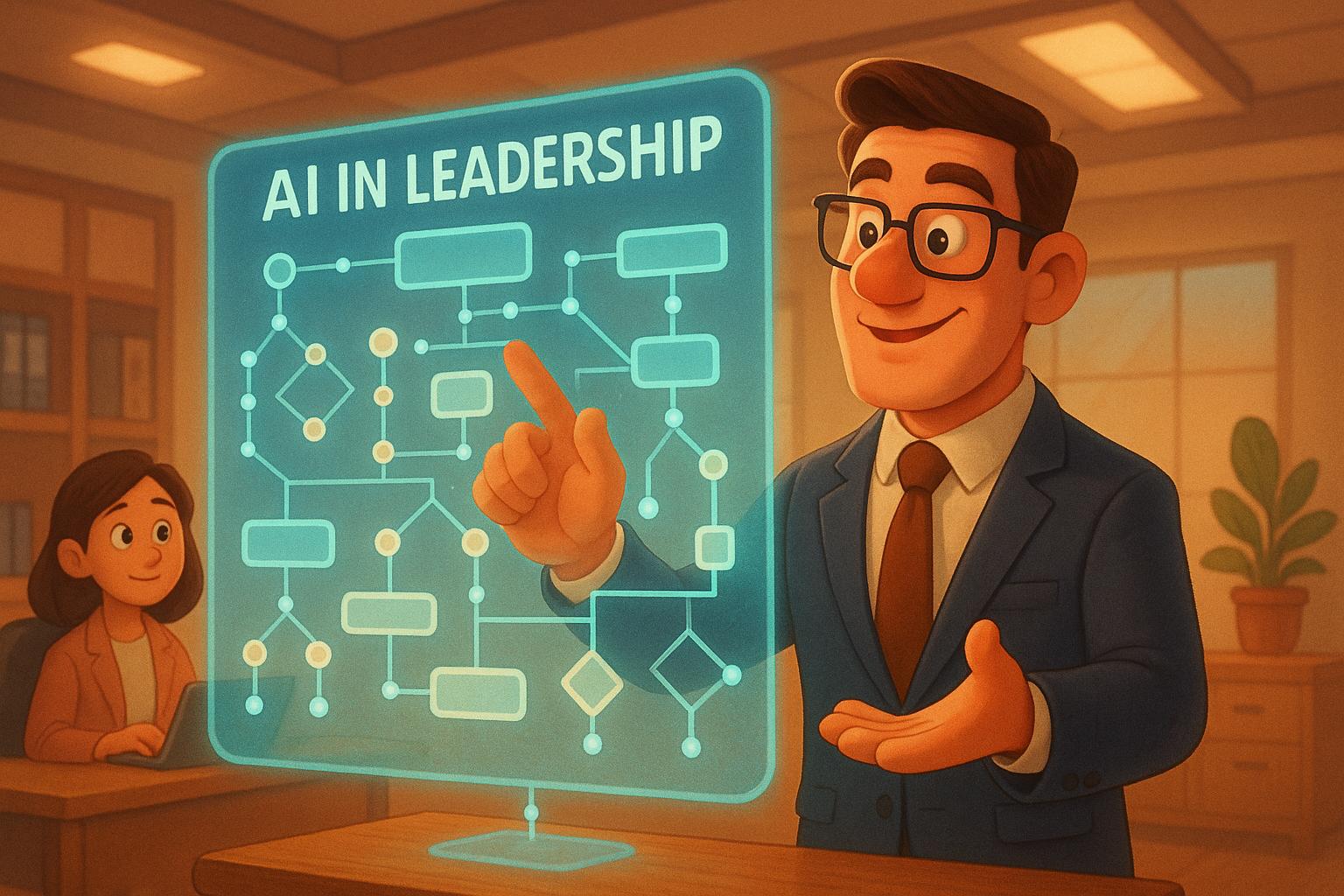
AI is transforming how small and medium-sized enterprises (SMEs) in the UK make decisions, helping them tackle challenges like limited resources and rapid market changes.
Here’s why it matters:
83% of SMEs are exploring AI, and 78% plan to increase spending on AI next year.
91% of SMEs using AI report increased revenue, with cost savings of 20–40% and profit boosts of up to 30%.
AI tools like machine learning, natural language processing, and explainable AI are enabling SMEs to gain insights, predict trends, and automate tasks - without needing large teams.
To succeed, leaders need a clear AI adoption plan. Start small, focus on specific goals (e.g., improving inventory management or customer targeting), and ensure compliance with UK regulations like GDPR. AI isn’t about replacing human decision-making - it’s about making smarter, evidence-based choices.
Key takeaway: AI can help SMEs achieve the efficiency of larger firms while maintaining their agility. Start by integrating AI into existing processes, and build trust with tools that are transparent and easy to understand.
AI Tech for SME Growth
The rise of AI is changing how UK SMEs work, mostly in how bosses make choices and run their firms. At the core of this big change are four main techs giving handy, data-led tools even to the small firms without big tech stuff.
Main AI Techs Made Simple
Machine Learning (ML) is key in AI use for SMEs. It looks at business info to find trends and guess future events. For instance, ML can check sales trends, how buyers act, and market states to predict what's coming. This is cool for SMEs in the fast-changing UK markets.
Natural Language Processing (NLP) lets computers get and handle human words. With NLP, AI can go through emails, meeting notes, or client feedback to find key points. It can sum up talks, mark important points, and even write up key plans, saving time for harder choices. For SMEs dealing with lots of people, this skill is a big deal.
Generative AI makes new stuff and ideas from what data shows. SME leaders can use it to make ads, think up business ways, or test new plans. In UK new firms, generative AI makes making new products and testing plans faster, helping firms start selling sooner.
Explainable AI (XAI) makes things clear by showing how AI systems make their picks. This is key for SME leaders who need to explain choices to people, investors, or rules people. Instead of just a secret system, XAI shows what went into every tip.
All these techs help SME leaders make smart, ahead-of-time choices that lead to winning.
How These Techs Help in Deciding
These AI tools tackle big challenges that UK SMEs face:
Predictive analytics: ML helps firms guess client needs, set up stocks, and look at money risks, leading to smarter, data-led choices.
Process automation and scenario planning: Usual tasks like matching money sheets, welcoming new workers, or handling stock chains can go automatic. At the same time, AI can play out different firm ways and make new plans, cutting costs and doing more with less.
When these techs work together, they're even stronger. For example, NLP can pull insights from client feedback, ML can guess behavior trends, and generative AI can create focused plans. This mix of skills gives SMEs tools that big firms once only had.
Building Trust with Explainable AI
While doing things well is big, trust is key. Explainable AI makes sure each tip comes with clear, easy reasons. This is big for meeting UK rules like GDPR, which want auto choices to be open and fair.
Getting the team in on the AI start process can grow trust too. When groups get how AI works and see the thought behind its tips, they're more likely to use these tools. Starting with small, easy to get outputs can grow trust over time.
For UK small businesses, places like AgentimiseAI are really useful. Their AI Leadership Agents serve as online top-level advisors. These mix deep field know-how with AI-powered tips. These tools give clear views and are to be trusted. They help bosses of small firms make quick, smart choices. By mixing expert-made online advisors with strong, data-based tips, places like AgentimiseAI aid UK small firms in facing hard times with trust and exactness.
AI Tools for Small and Medium Businesses
Adding AI to a small or medium business isn't just about new tech. It needs a clear plan that blends AI findings with the usual business choices. In the UK, this means using AI to match with what the business already plans to do.
Using Predictive Analytics to Make Plans
Predictive analytics turns basic business info into useful tips. Instead of just guessing or using old ways, businesses can use AI to spot patterns in sales, how customers act, and market shifts. This helps them see what they might need soon. For example, a UK shop used predictive analytics to better plan its stock for seasons. It ended up with 20% less extra stock and sold 15% more.
This method also helps businesses stay ahead of what customers might want next. By looking at social media, search trends, and business info, AI can show new trends or upcoming problems months before they happen.
To start, pick a key area like stock, staff, or ads and use past info with cost-friendly AI tools online. Check the AI guesses against what really happens to tweak your method. This improves everyday work and gets you ready for bigger plans and tests.
AI-Powered What-If Tests
What-if tests let businesses try out ideas without real risks. With AI, this gets quicker and more exact, letting leaders think about several choices before using resources.
The power of AI in what-if tests is that it can show how different things work together. Say you want to start selling a new product, AI can show how different price choices might work out under various money conditions, competitor moves, or market shifts - much better than old spreadsheets.
This is also great for supply chain planning. AI can show possible troubles, check other plans, and find weak spots in the supplier chain. In one case, a business used this to make its buying plan better, making its supply chain stronger.
Money planning wins too. AI can show different growth options, rate changes, or costs shifts, helping businesses make smarter money choices and talk better with investors or banks.
Start by spotting big upcoming choices or risks. Set three to five real what-ifs for each, and use AI tools to see what might happen. The aim is to understand possible results and how they could ripple out.
7-Step AI Plan for Small and Medium Businesses
A clear, step-by-step plan can cut the risks of adding AI and help it succeed.
Step 1: Getting Ready Check See if your business is ready by looking at if leaders get AI, if your data is good, and if there's a will to try new things. Many businesses find they need to tidy up data and train leaders more before starting with AI.
Step 2: Set Goals
Make clear, exact aims for using AI. Skip broad targets like "make things better", and instead choose clear results, like cutting invoice time by half or making demand guesses 30% more right.
Step 3: Prep Data
AI needs clean, well-set data to work right. Check your data now, see where it lacks, and set up ways to keep it good as time goes on.
Step 4: Test Small
Start with little tests. Small projects that tackle real work issues can build trust and give key tips without messing up everyday work.
Step 5: Check and Change
Look at pilot outcomes next to your first aims. This step is key to see what works, what does not, and how to change your plan.
Step 6: Grow Big
Spread good test projects all over your business, but go slow to keep from putting too much on your team. Use the "3-5-10 Rule": spend 3% of yearly money on AI training, 5% on test projects, and 10% on using it big if the tests work.
Step 7: Check ROI
Always check how AI affects costs, how fast you can make choices, how right those choices are, and how happy your staff are. These checks help keep up money put into AI and shape future plans.
This step-by-step plan sees using AI as changing your business, not just adding new tech. By following each step, small and mid-size companies can get past the big issue where 87% of AI projects don't make it after testing.
AgentimiseAI helps small and mid-size companies all through this path by giving them made-to-fit leader training, AI tools, and online advice help. Their GuidanceAI platform puts leader teams in touch with skilled AI agents trained by business pros, giving top-level advice without needing full-time top bosses.
AI Control, Ethics, and Risk Control
Making AI work well is not just about tech. It is about having strong control and fair steps in how you use AI. With 87% of AI efforts failing from top control problems, and 80% of top business people pointing to clearness, fairness, bias, or trust as big issues in using new AI, these problems cannot be left out. By dealing with these problems directly, small and mid-size businesses can do more than follow rules - they can find real business gains. This is why putting in place a firm control plan is key.
AI Control Ways for Small and Mid-size Businesses
In control, small and mid-size businesses have four main ways to think about, each with its own complex parts and needs for resources:
Rules-based control: This way relies on tight rules. While very full, it can be hard for smaller groups that need to move fast.
Risk-based control: This way puts resources in high-risk areas, like client info or automatic choices, by sorting AI uses into small, limited, high, and not okay risk levels.
Outcomes-based control: Here, the focus is on setting clear results and watching progress to keep people answerable.
Principles-based control: This way sets fair rules without adding extra red tape.
Many small and mid-size businesses do well with a mixed way. For example, start with principles-based control to lay down fair ground rules and then add risk-based actions for key uses to find a good balance. In the end, the best way is one that fits your group’s size and work needs.
Fair AI and UK Rule Needs
Control is just one part of the deal; small and mid-size businesses in the UK must also meet fair standards and follow rules. Key rules include GDPR, the Data Protection Act 2018, and tips from the Information Commissioner’s Office (ICO). While the UK does not have a special law for AI yet, the ICO gives detailed help on AI and keeping data safe.
Clearness plays a key role. Groups must write down how AI choices are made and give clear reasons for automatic results, as needed under GDPR. Doing Data Protection Impact Checks (DPIAs) is very key when personal info is used in high-risk cases.
Being answerable is just as key. Small and mid-size businesses should name a person in charge of AI choices, like a founder or a top leader. Regular team learning on GDPR and fair AI steps can also cut risk of not following rules. Also, businesses must have ways for people to fight back against automatic choices that change them a lot.
Handling AI Risks
AI brings many risks, but these can be managed with the right moves:
Bias in algorithms: This happens when the info used to train is not fair or based on wrong ideas, leading to unfair results. To deal with this, use a mix of data sets and check AI results often for fairness.
Not clear why: When it's not clear why an AI system gives some suggestions, it can hurt trust. Using tools that show how AI works and writing down how choices are made can make things clearer, meeting GDPR needs.
Too much AI trust: Using AI too much can hide good human thought. Keep human eyes on big choices and set clear plans for when people need to step in.
Losing private data: This can bring big problems. Make computer safety better, let only key staff see data, and keep up with GDPR rules. Do safety checks often to find weak spots soon.
On average, small and medium businesses use four AI tools, costing about £3,500 to £4,000 each year, and 45% of them need 5-10 tools to handle their work well. This shows why checking risks often is a must.
Even in small groups where workers do many jobs, having teams from different parts of the business can be very helpful. Getting ideas from how things work, sticking to rules, and talking to customers can show problems with ethics that might not be seen otherwise.
Thinking ahead is another good way. By guessing future troubles - like unfair hiring or losing data by mistake - companies can make plans to lessen the bad effects of these issues.
Keeping an eye on things like how many times AI problems happen, how often they check for risks, and how much of AI's choices are checked for fairness can help make things better. These steps show that you use AI in a careful way and this builds trust with people you work with.
AgentimiseAI’s GuidanceAI gives leaders tailored tips from expert AI helpers, offering clear advice on ethics and risk handling.
Simple AI Tools Help Leaders in Small Biz
Choosing good AI tools can change how small and medium businesses (SMEs) make choices. The main point is to pick platforms that fit your business needs well. As many as 87% of AI projects don't get past test stages because of issues with leaders and how it all fits together. So, it's more vital than ever to choose well for SME leaders.
Today’s AI tools do a lot more than just look at data. They have things like virtual helpers, plan testing, and tips that happen right away, helping bosses make smarter choices. These custom tools are made to help with smart planning, giving SMEs an edge.
How AgentimiseAI Helps SME Bosses
AgentimiseAI has a platform called GuidanceAI that deals with a usual problem: tools that don’t really fit what a business needs. This platform has Leadership Agents - like virtual top bosses made with help from experienced business pros. These agents are like having wise bosses with you when making big choices. They give advice fit to your kind of business, way of doing things, and special issues.
GuidanceAI’s custom way includes AI Discovery Workshops, which let SMEs find their best chances with AI. This makes sure the tech solves real problems and doesn’t just make things more complex. They also have AI Leadership Training programs, made by business pros, which help leaders feel sure and use AI in smart ways.
A UK company that’s getting bigger used GuidanceAI to try out entering new markets. They cut planning time by 20% and made choices with more confidence using data. The platform fit well into what they already did, helping them grow smoothly. This shows how AI can make choices better when used in a smart way.
But picking right tools is just one part - fitting them into daily work matters just as much.
Fitting AI Tools into SME Daily Work
For AI to really help leaders, it must blend well into what they already do. Start by mapping how choices are made now and see where AI can help most.
A quick win for SMEs is making routine data tasks automatic. This lets leaders think about big plans while AI handles data and starts analyzing plans. This eases the mental load on small leader groups, who often have too much info to handle.
A planned way to add AI is key. Start with workshops to spot specific chances for your business. Making sure leaders know how to use AI results in their choices makes the tech a real help.
Planning for adding AI may seem big, but the 3-5-10 Rule gives steps, letting you try how well it works before you spend a lot. Instead of changing everything at once, successful SMEs better what they do now by neatly adding AI features. This cuts upset and adds to the gains of AI in making choices.
When you start mixing things, it is key to watch if it is working. Use things like how fast you can decide, how right you are, and how sure the leaders feel as signs. For example, a small UK firm saw a 25% gain in how quick they made choices and a 15% rise in good results in half a year after they put GuidanceAI in their work line.
The aim of AI is not to take the place of human thoughts - it is there to make leader skills stronger with smarter input and looking at different cases. When used well, AI helps leaders of small firms think and choose quicker and better, while keeping them quick on their feet for growth.
Conclusion and Key Takeaways
AI's Role in Leadership Decision-Making
AI is reshaping how leaders make decisions by offering data-driven insights, scenario analysis, and predictive modelling. These tools empower lean teams to achieve outcomes that rival those of larger organisations. For small and medium-sized enterprises (SMEs), adopting structured AI frameworks can lead to impressive results, such as cutting operational costs by 20–40% and increasing revenue by as much as 30%. By leveraging AI, even resource-constrained SMEs can match the analytical capabilities of much larger companies, addressing one of their biggest growth challenges.
However, it's crucial to view AI adoption as a business transformation rather than just a tech upgrade. The most successful SMEs use AI strategically, integrating it into their processes to enhance efficiency while retaining the agility and personal touch that set them apart.
Trust is a key factor, with 80% of leaders highlighting concerns around explainability, ethics, bias, and trust. To address these issues, SMEs must focus on transparent and explainable AI systems. This ensures leaders can understand and validate AI recommendations, fostering confidence in decisions while maintaining accountability. With these principles in mind, SME leaders are better positioned to adopt AI effectively and responsibly.
Next Steps for SME Leaders
To realise AI's potential, SME leaders need a clear and actionable plan. Start by conducting an AI readiness assessment to identify areas where AI frameworks can make the biggest impact. The "3-5-10 Rule" outlined earlier serves as a practical guide for this process.
Begin with projects that are both high-impact and low in complexity. For instance, automating routine data analysis or using predictive analytics for inventory management can deliver quick wins. These early successes not only demonstrate AI's value but also build organisational confidence in its capabilities.
Invest in leadership training. Platforms like AgentimiseAI offer tailored programmes designed for founder-led SMEs, making AI concepts accessible without overwhelming leaders with technical jargon. Their GuidanceAI platform is a prime example - providing virtual C-suite advisors trained by business experts to deliver boardroom-level advice without the expense of hiring full-time executives.
Governance and ethics should be a priority. Develop clear AI policies that align with UK regulations, including GDPR and emerging AI-specific guidelines. This ensures responsible and compliant AI adoption, which is essential for building trust with stakeholders.
It's worth remembering that SMEs contribute over 50% of global GDP and employ more than two-thirds of the global workforce. Your AI journey isn't just about improving your business; it's part of a broader shift positioning SMEs as drivers of innovation in the digital economy.
Success with AI doesn't require perfection. Start small, think strategically, and focus on frameworks that enhance your strengths rather than replacing them. AI-driven decision-making is about making smarter choices, faster, and with greater confidence in an increasingly complex world.
FAQs
What steps can SMEs take to prepare for AI adoption and ensure a smooth implementation process?
For small and medium-sized enterprises (SMEs) venturing into AI, preparation lays the groundwork for success. Begin by pinpointing specific areas in your business where AI could make a real difference - whether it’s improving decision-making, streamlining day-to-day operations, or enhancing how you connect with customers. Having clear goals will help you stay focused and choose the right tools for the job.
Take a close look at your current processes, the quality of your data, and how ready your team is for this change. AI thrives on accurate and well-structured data, so it’s essential to ensure your information is organised and relevant. Equally important is involving your team from the outset - offer training opportunities and address any concerns they might have about adopting AI.
You might also want to collaborate with experts or platforms like AgentimiseAI, which cater specifically to SMEs. Their tools, such as GuidanceAI, are designed to seamlessly integrate AI into your leadership workflows, providing virtual C-suite-level advice to help you scale your business with confidence and efficiency.
How can SMEs ensure compliance with UK regulations like GDPR when adopting AI systems?
To align with UK regulations like GDPR when deploying AI systems, SMEs need to prioritise data protection and transparency. A good starting point is conducting a Data Protection Impact Assessment (DPIA). This helps identify and address risks tied to processing personal data with AI.
Building AI systems with privacy at their core is crucial. Follow principles such as data minimisation - only collecting what's absolutely necessary - and purpose limitation, ensuring data is used solely for its stated purpose. Keep users informed about how their data is utilised and secure explicit consent when required. Regular reviews of your AI systems are also key to staying compliant as regulations shift over time.
For founder-led SMEs, platforms like AgentimiseAI offer tailored AI tools and expert guidance, making it easier to meet compliance requirements while improving decision-making processes.
How can SMEs build trust in AI technologies by focusing on explainability and transparency?
To build trust in AI technologies, SMEs should focus on explainability and transparency when integrating these systems. This means ensuring that AI tools can clearly articulate how they arrive at decisions, making it easier for teams and stakeholders to understand and trust the technology.
Choose AI tools that offer detailed insights into their processes and results. For instance, systems that highlight the factors influencing their decisions can demystify the technology and make it feel more accessible. Alongside this, equipping teams with the skills to interpret and work with AI outputs is a crucial step in easing adoption and boosting confidence.
It's equally important to foster open discussions about the limitations and ethical challenges of AI. Addressing these concerns head-on can help create an environment where trust and collaboration thrive, making AI-driven decision-making a shared and accepted practice.